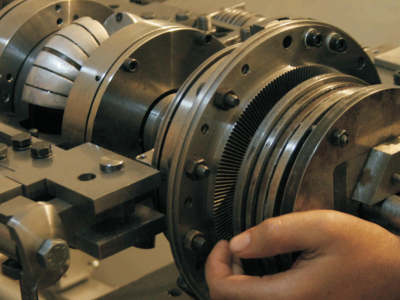
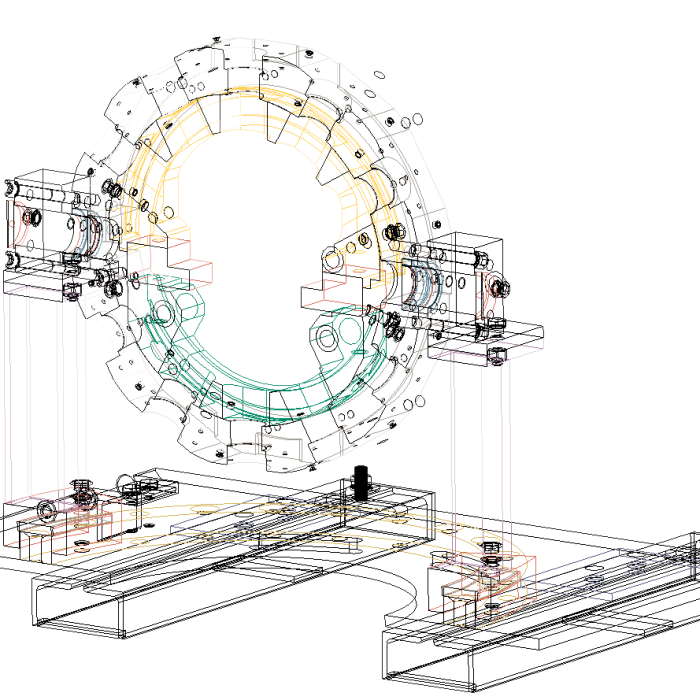
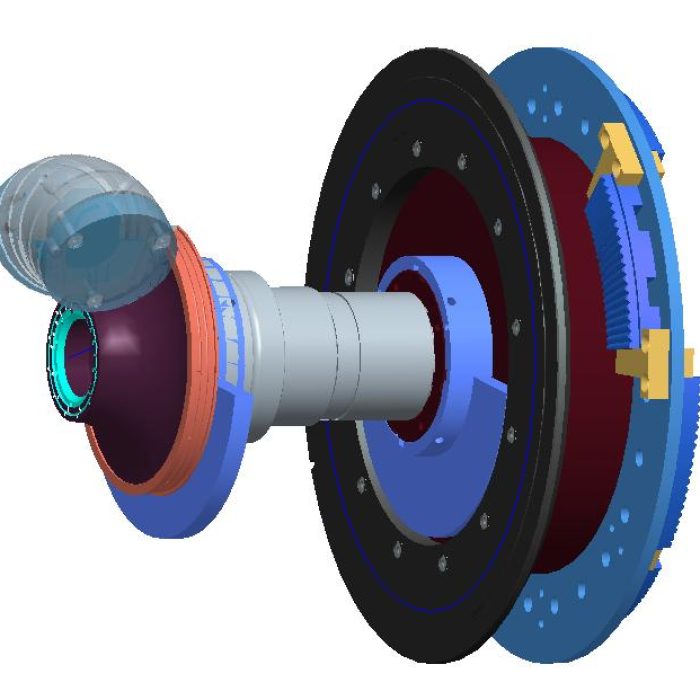
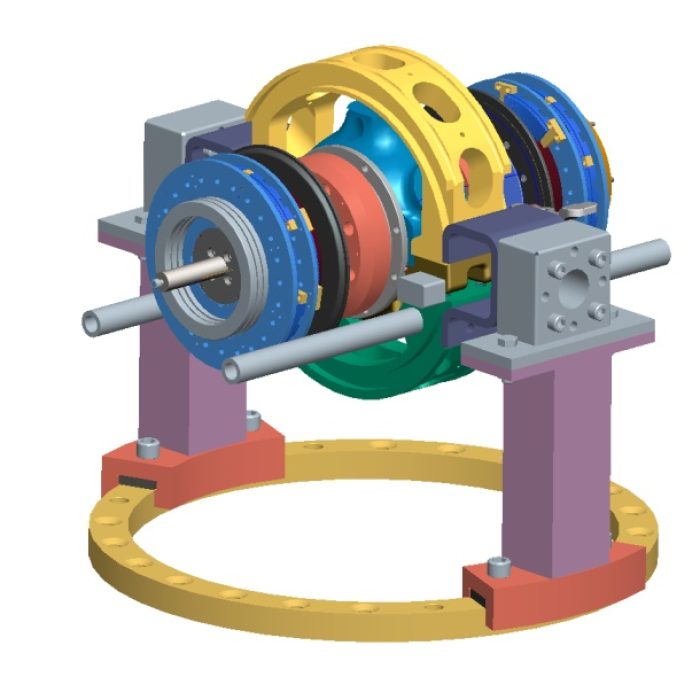
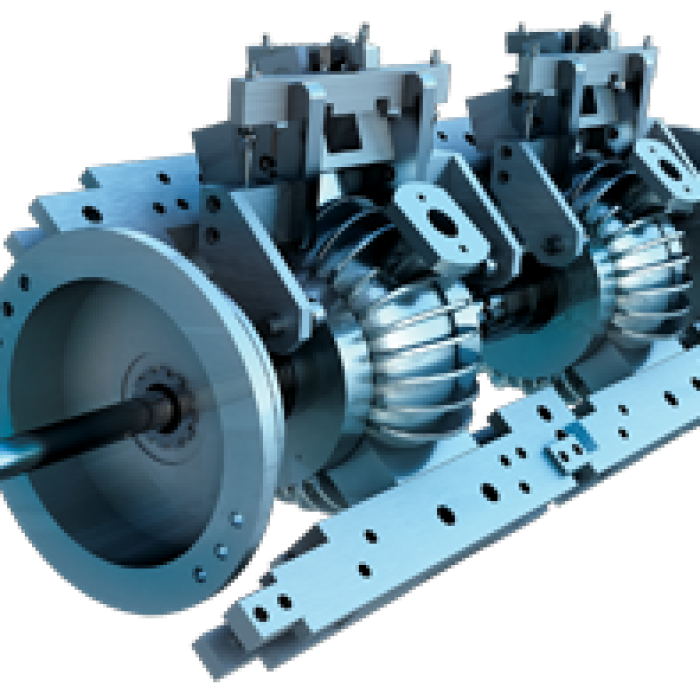
We live in an era where almost anything can be modeled on a computer, even a virtual human partner. We know of virtual reality like the one in the movie ‘The Matrix’, or ‘Virtuosity’. Programmers can model interactive games showing entire cities and courses for bike and car races. So, we can model a machine on a computer based on logical mathematical construction of a new concept.
To model a machine, one needs to 1st know the geometry (the form, shape, size, and dimensions). The RVCR Concept was not an abstract idea, rather it used newer means to achieve known thermodynamic gas processes. The concept though conceived and illustrated using basic geometric shapes, it had to be shaped into feasible geometry. Like rectangular flat surfaces of a flap, in the concept drawings are given rounded features and circular cylindrical shapes. These shapes are further accessed for feasibility of fitting together in an assembly. The assembling process too needs to be feasible. This is followed by a feasibility check for manufacture. The comes in the integrity to perform the intended function. This whole process involves thought experimentation with engineering principles.
Once done the 1st ever RVCR core assembly emerges. The assembly is then put through successive failure mode analysis and if any feasibility issues exist, the entire assembly is reworked. Finally after a number of corrective iterations the 1st virtual assembly or the CAD model is arrived at.