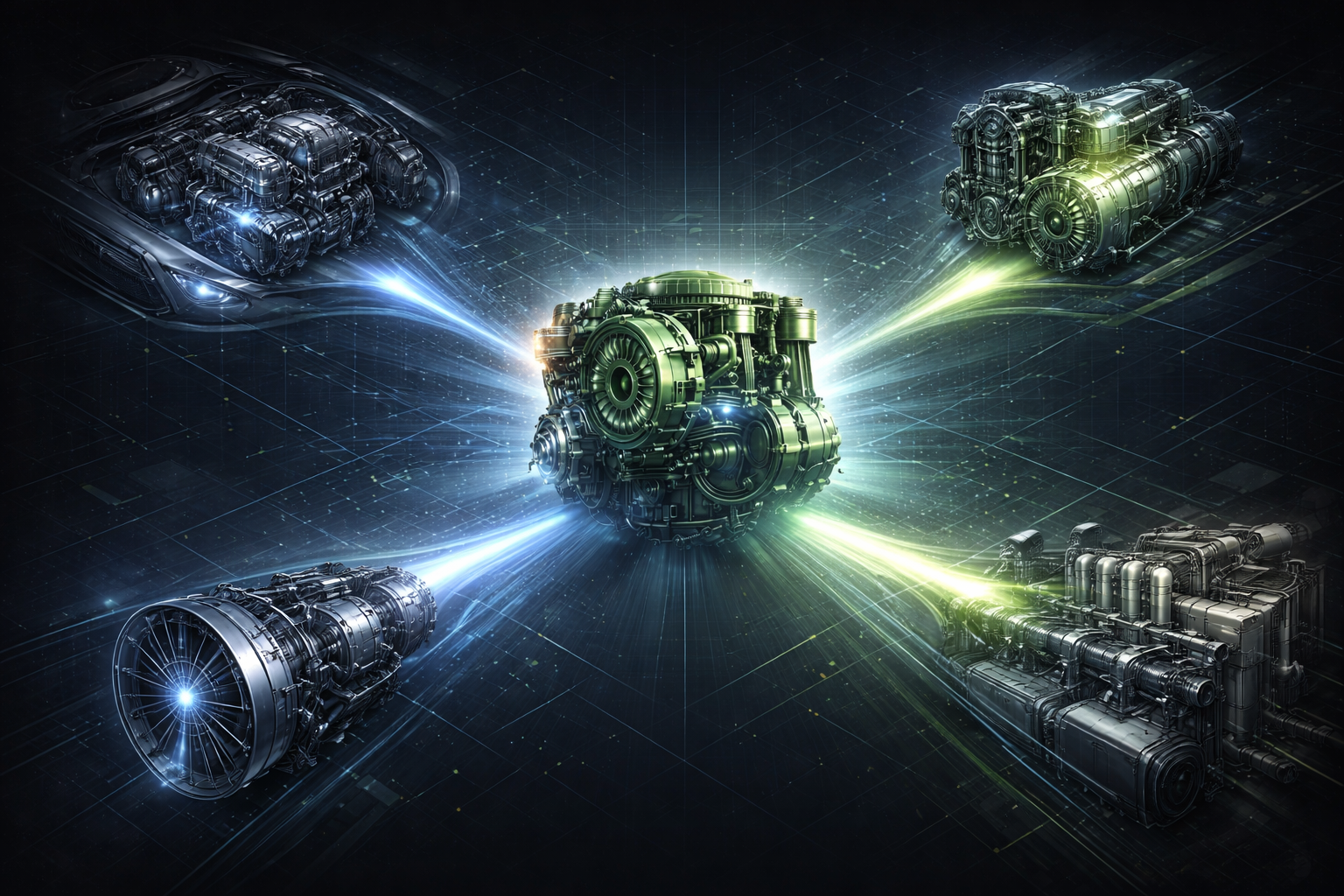
RVCR & RotoDyCo³™ Technology Overview
RVCR (Roto‑Dynamic Variable Compression Ratio) and its engine embodiment, RotoDyCo³™, represent a fundamental shift in how mechanical energy is converted from combustion. Rather than optimizing within the constraints of piston‑crank geometry, RVCR introduces a new kinematic class—one that enables continuous, real‑time control of compression and torque transfer as an intrinsic property of the mechanism.
This technology is designed for a future where engines must adapt dynamically to fuel diversity, operating variability, and emissions constraints—without external complexity or architectural compromise.
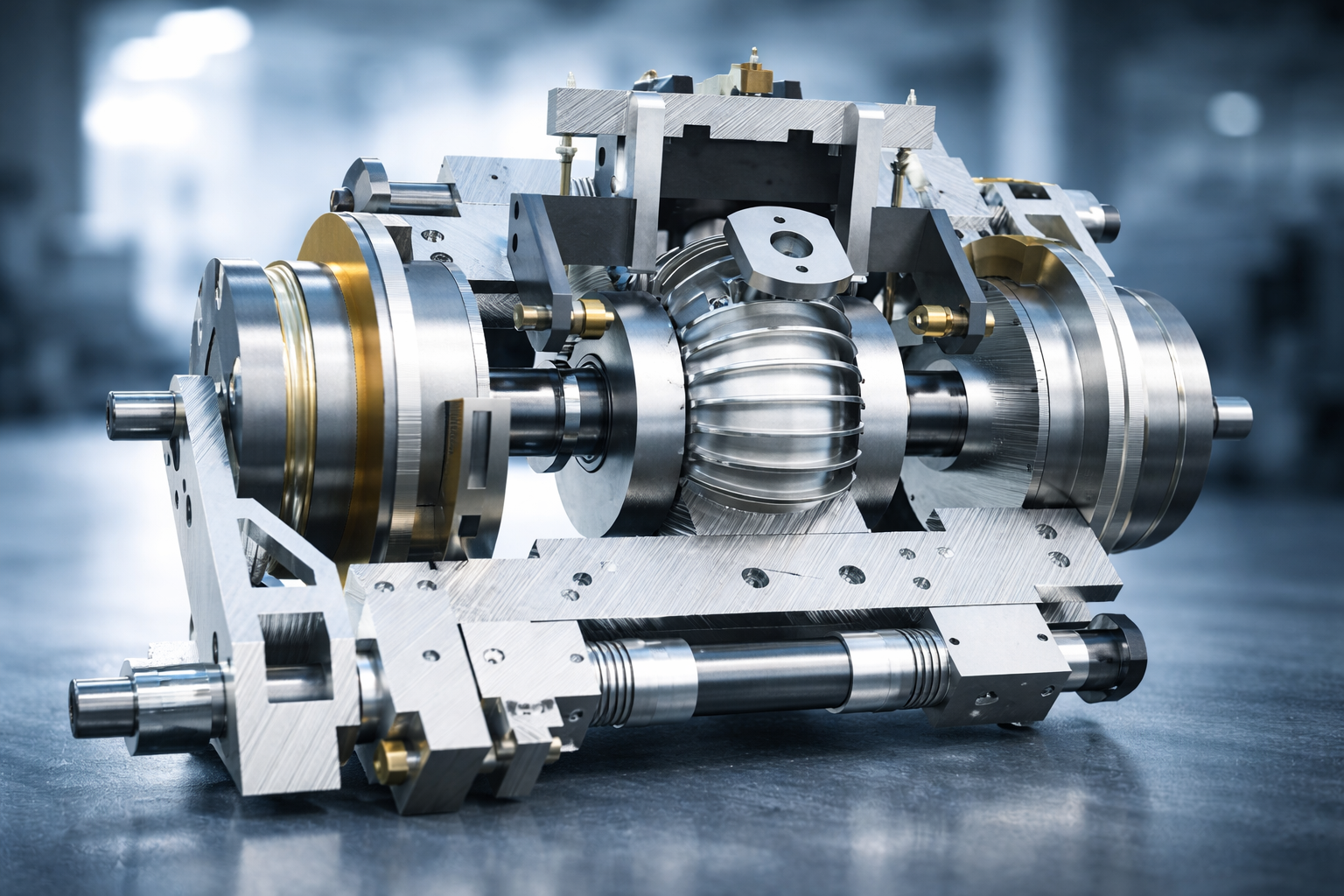
RVCR as a New Mechanism of Energy Conversion
At its core, RVCR is an invention in mechanical kinematics, not an incremental engine feature. It replaces reciprocating motion and slider‑crank linkages with a controlled rotary‑toroidal motion that maintains optimal force orientation throughout the combustion cycle.
Key implications of this shift include: – Elimination of reciprocating inertia losses – Continuous mechanical leverage through gas expansion – Decoupling of compression control from fixed geometry.
RVCR therefore operates as a mechanism‑level solution to efficiency, emissions, and fuel‑flexibility challenges that conventional engines can only address conditionally.
Rotary‑Toroidal Architecture
RotoDyCo³™ employs a toroidal combustion chamber geometry with rotary vane‑piston elements coupled to a central transmission shaft. This architecture enables: – Compact, balanced assemblies with reduced vibration – Uniform load distribution and lower peak stresses – Simplified sealing geometry compared to other rotary concepts.
Unlike alternative rotary engines, the RVCR geometry is specifically designed to support variable compression and controlled combustion, not merely continuous rotation.
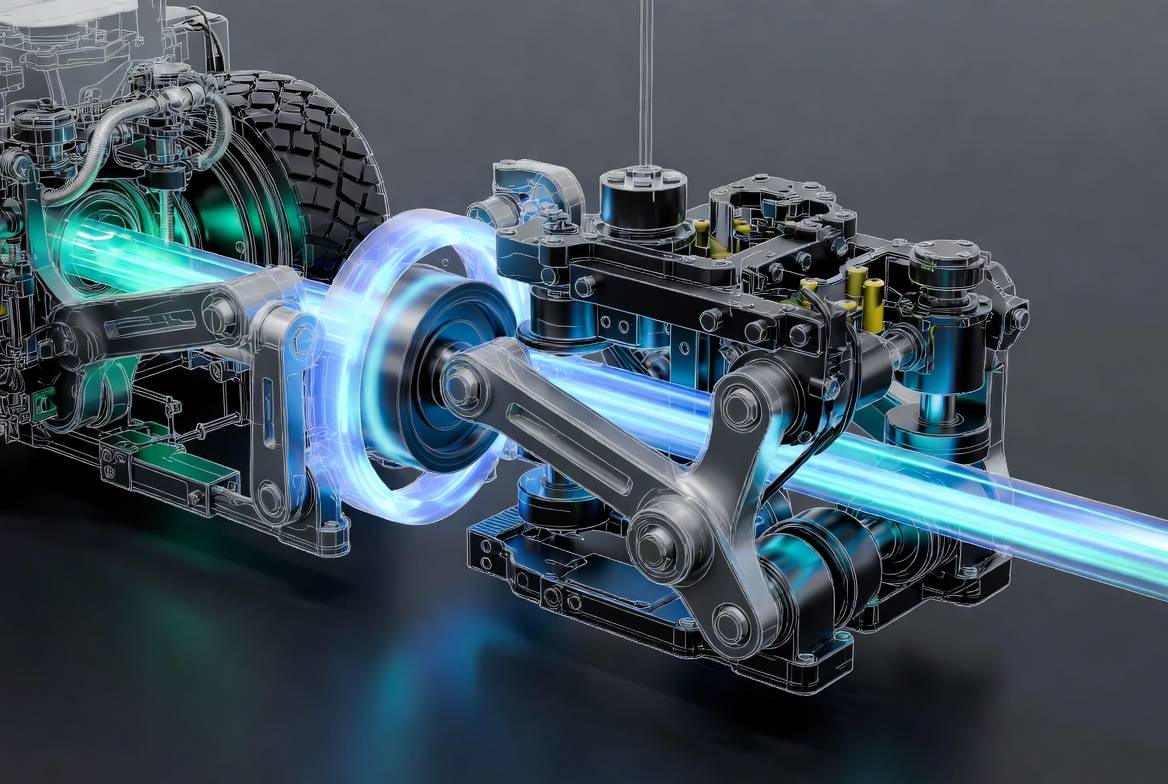
Native Real‑Time Variable Compression
Variable compression in RVCR is not achieved through secondary mechanisms, linkages, or actuators. Instead, compression modulation is native to the kinematic sequence itself.
This allows: – Continuous adjustment of compression pressure during operation – Optimization for different fuels and combustion characteristics – Stable efficiency across wide load and speed ranges
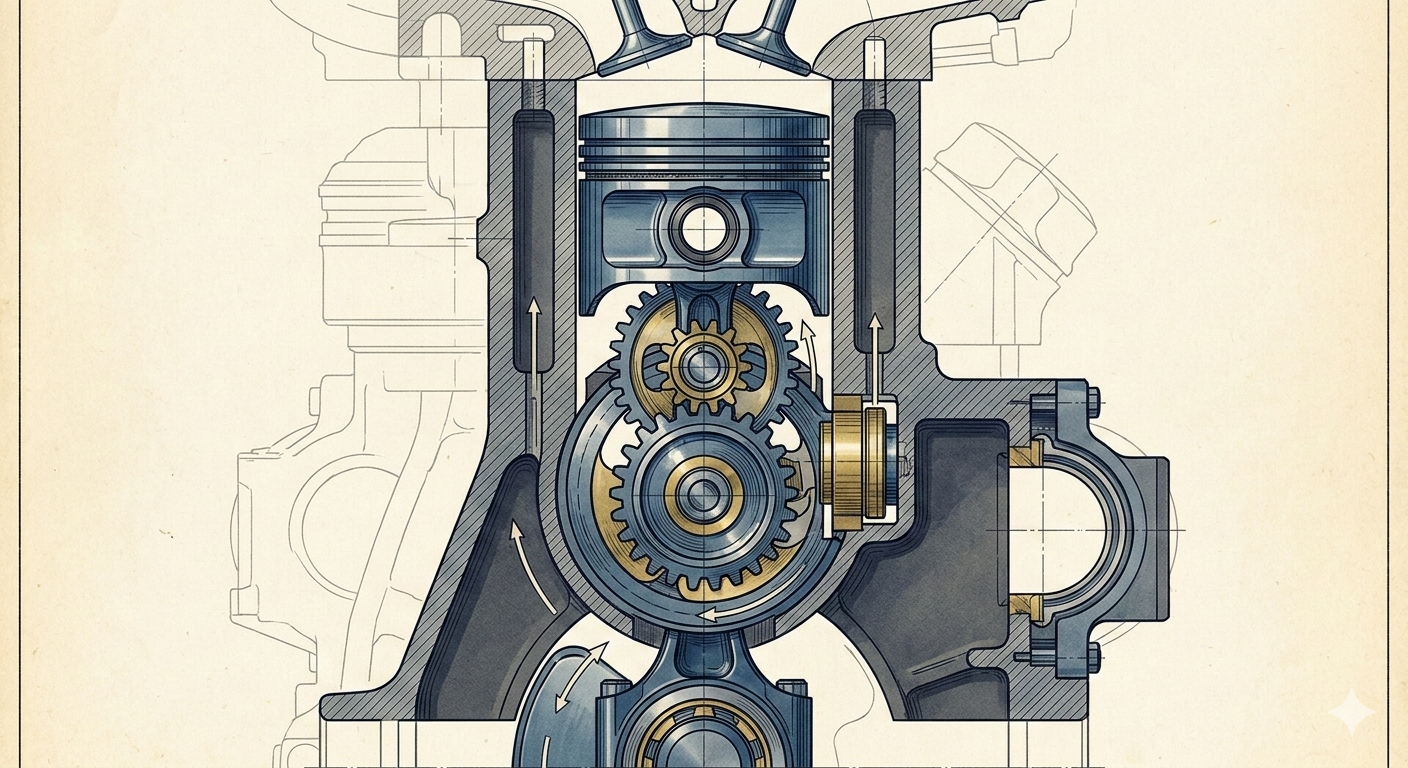
As a result, RVCR enables practical, industrial‑scale variable compression—an objective that has remained elusive for over a century using conventional architectures.
Direct Torque Transfer & Mechanical Leverage
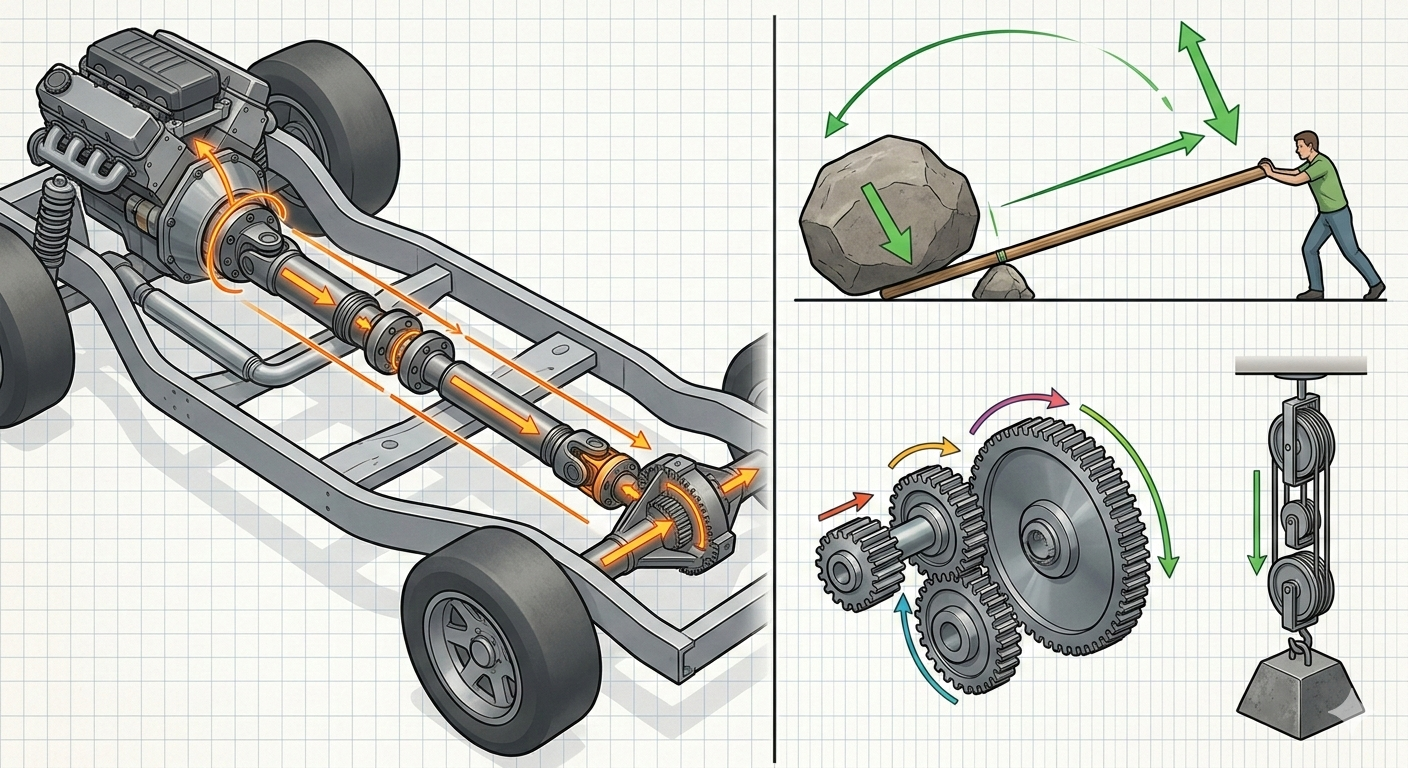
In conventional engines, peak gas forces rarely coincide with optimal crank angles, resulting in partial force utilization and structural stress. RVCR reorients force transfer so that gas expansion acts with near‑constant mechanical advantage throughout the power stroke.
This produces: – Higher usable torque at lower rotational speeds – Reduced mechanical losses – Improved durability under heavy‑duty operation
The outcome is an engine platform inherently suited to high‑torque, low‑speed, and efficiency‑critical applications.
Direct Torque Transfer & Mechanical Leverage
Global engine developers have pursued variable compression through numerous approaches—articulated cranks, multi‑link systems, movable heads, and complex actuation. While technically feasible, these solutions introduce cost, reliability, and control challenges that limit scalability.
RVCR succeeds where others have struggled because: – Variable compression is intrinsic, not additive – Control complexity is reduced, not increased – Mechanical simplicity improves, rather than degrades
This makes RVCR a platform technology capable of supporting multiple engine classes, fuels, and applications.
From Technology to Engine Platforms
RotoDyCo³™ translates RVCR kinematics into a family of adaptable engine platforms. The architecture supports: – Multi‑fuel internal combustion engines – Hybrid‑ready prime movers – Stationary and mobile power systems.
Its modular nature enables scaling across power ranges while preserving the same underlying mechanical and combustion principles.