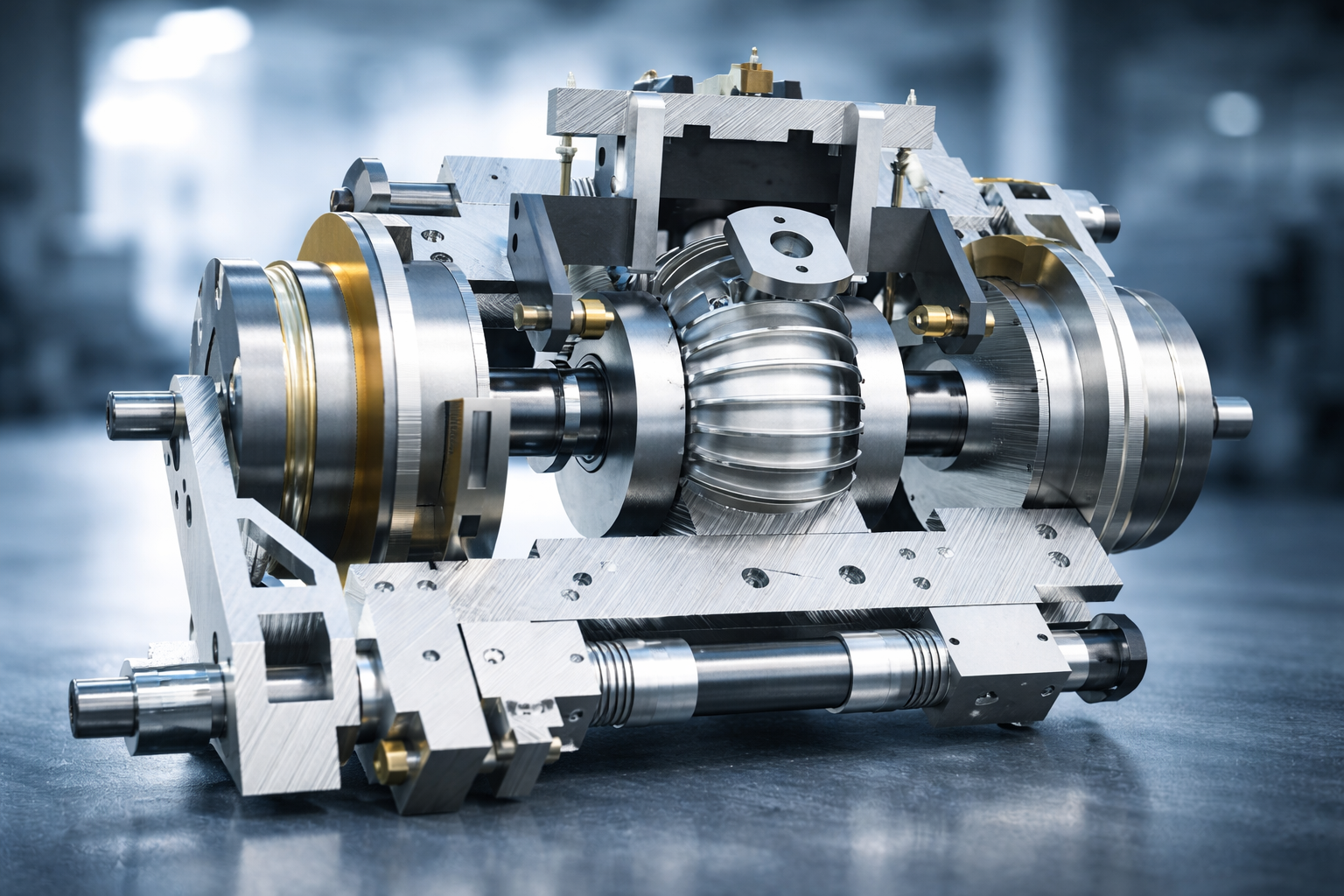
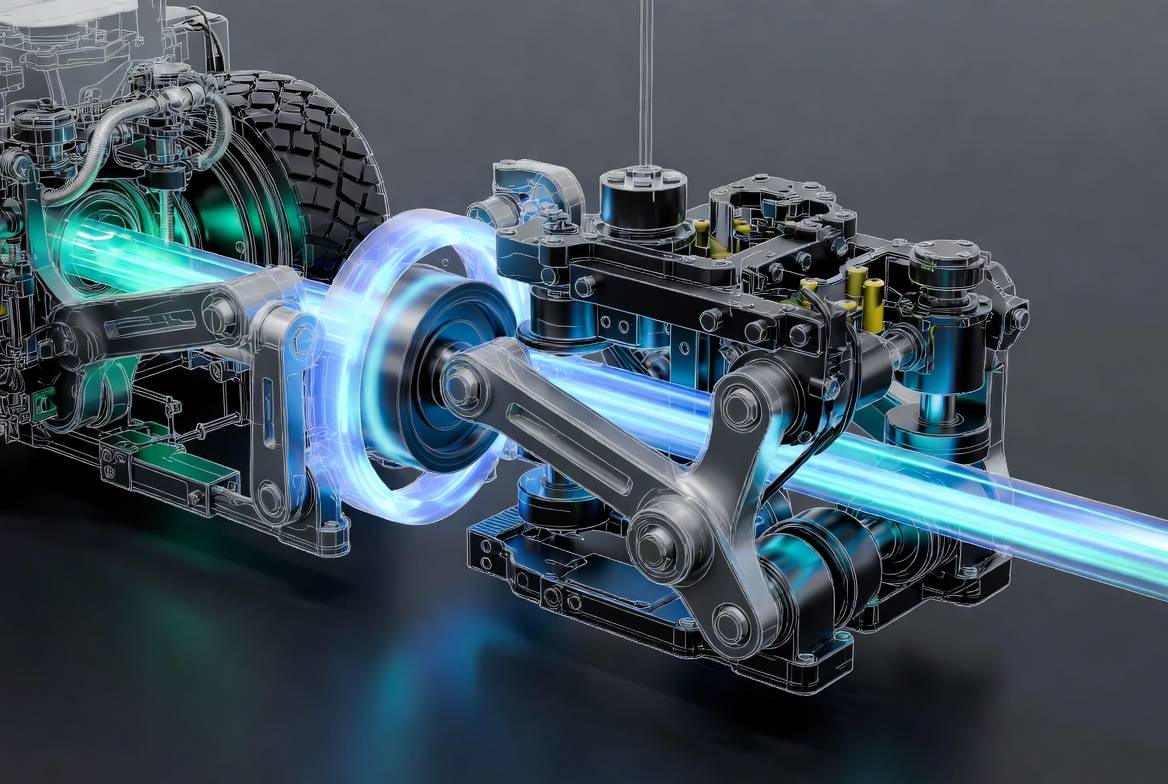
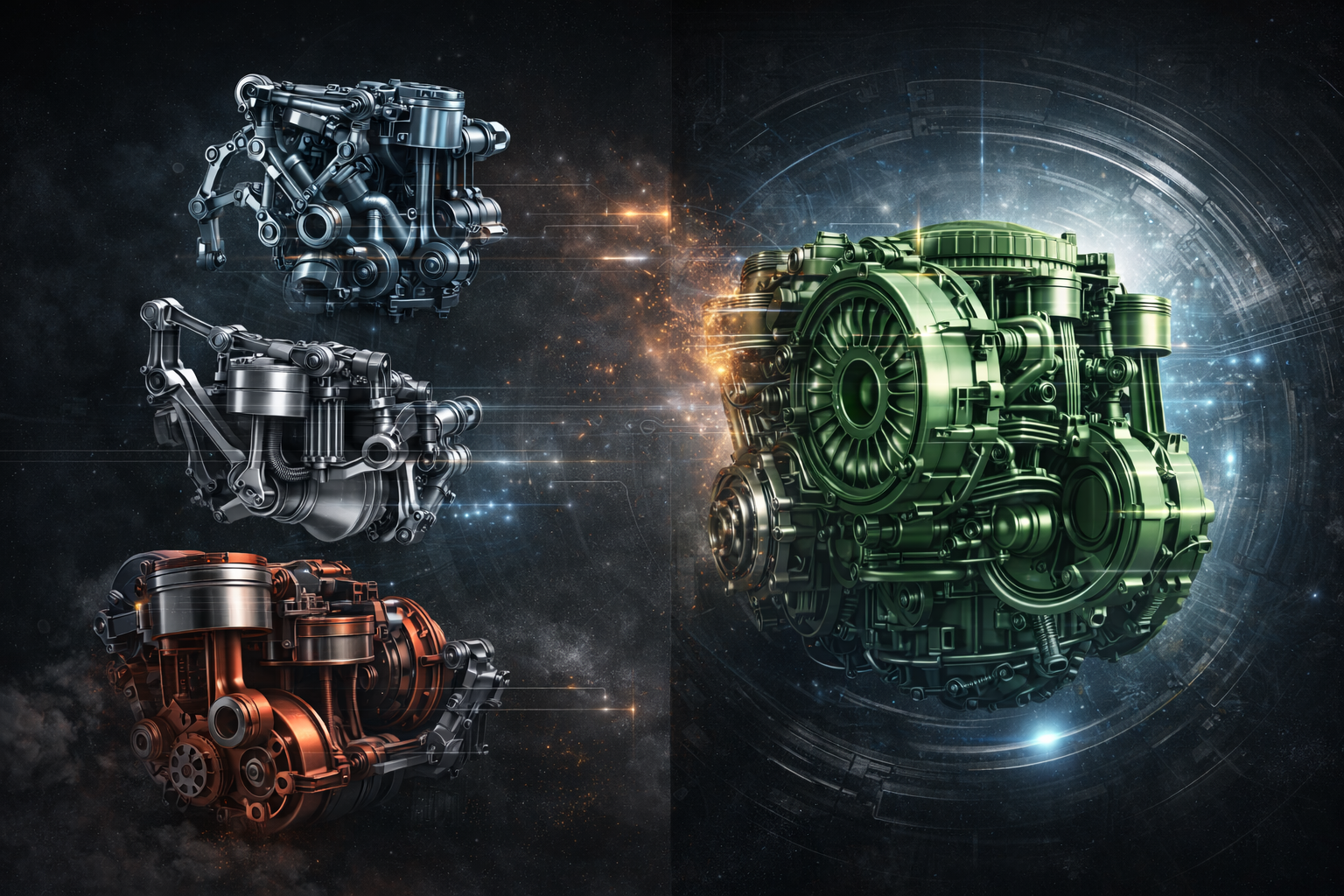
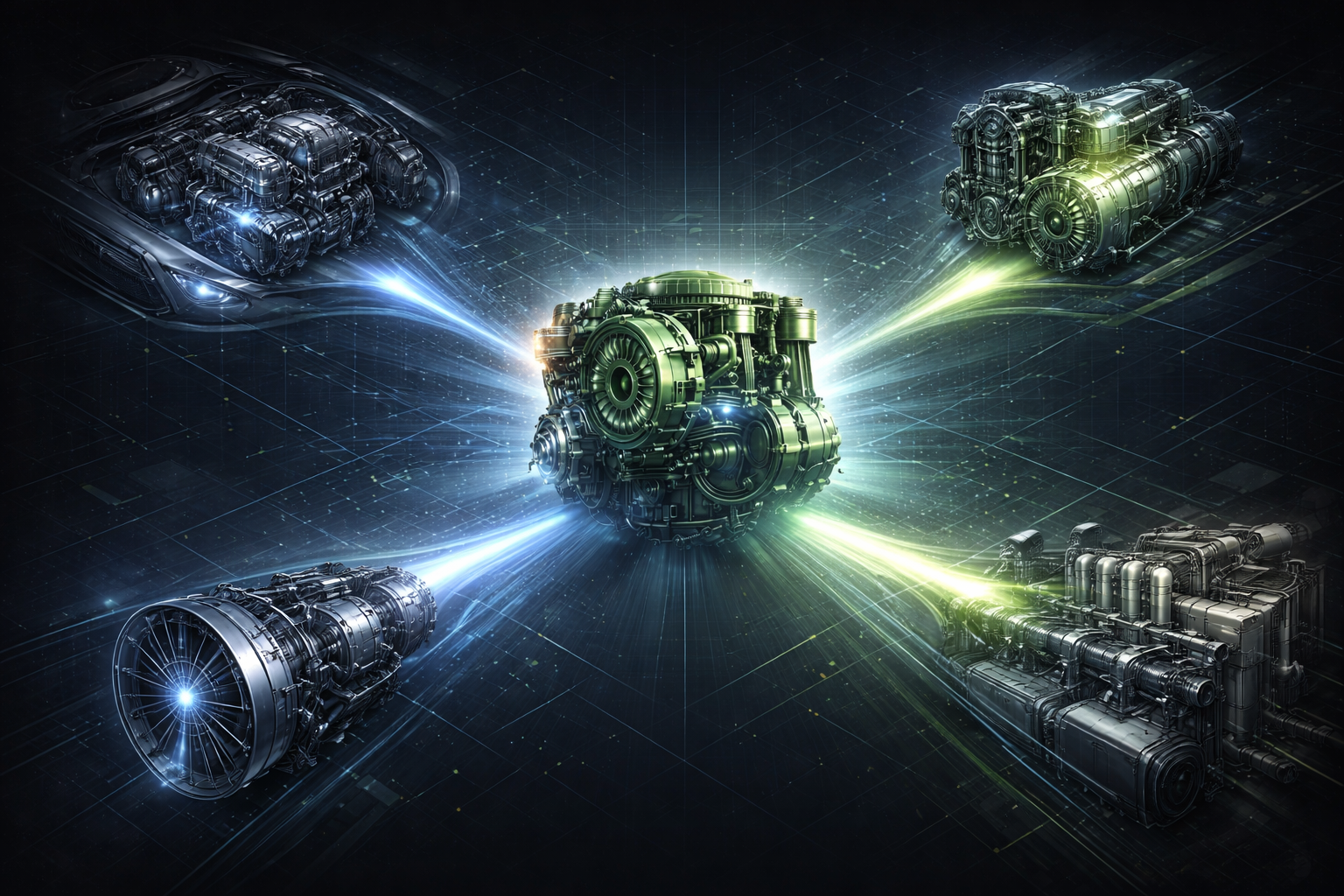
RVCR and RotoDyCo³™ technology are designed as platform-level engine architectures, adaptable across a wide range of transport and energy applications. Their ability to deliver high efficiency, fuel flexibility, and robust torque characteristics makes them particularly suited to sectors where conventional engines face structural, regulatory, or operational limitations. KGYAT’s current focus is on medium- and slow-speed, heavy-duty segments, where durability, emissions control, and lifecycle economics are critical decision factors.
Hybrid Commercial Vehicles
Hybrid powertrains require internal-combustion engines that operate efficiently across variable loads, frequent start–stop cycles, and diverse operating points. Conventional engines struggle under these conditions due to fixed compression and narrow efficiency bands. RVCR engines enable: – Stable efficiency under variable load and duty cycles – Real-time adaptation to hybrid operating strategies – Optimized combustion for transitional and green fuels This makes RVCR particularly well-suited as a range extender or primary engine in hybrid commercial vehicle platforms.
Off-Highway Construction & Mining Equipment
Construction and mining equipment operate under sustained high loads, harsh environments, and stringent emissions regulations. Reliability, torque density, and fuel flexibility are essential. RVCR engines offer: – High torque at low operating speeds – Reduced mechanical stress and wear – Improved emissions control without excessive after-treatment complexity These characteristics support heavy-duty applications such as excavators, loaders, haul trucks, and drilling equipment.
Marine Propulsion & Auxiliary Systems
Marine applications demand fuel flexibility, continuous operation, and compliance with tightening global emissions norms. Electrification remains impractical for many marine propulsion and auxiliary use cases.
RVCR technology enables: – Multi-fuel operation to adapt to regional fuel availability – High efficiency at steady-state and variable loads – Compact, balanced engine configurations for marine integration Applications include auxiliary generators, propulsion systems, and onboard power units.
Decentralized Power Generation
Distributed and decentralized power generation systems require engines capable of long-duration operation, fuel adaptability, and stable output at low rotational speeds. RVCR engines support: – Efficient power generation at reduced RPM – Compatibility with a range of fuels, including future green fuels – Lower maintenance and improved uptime This makes them suitable for gensets, micro-grids, and backup power systems.
Defense & Strategic Logistics
Defense and strategic logistics platforms require robust, reliable engines capable of operating across varied environments and fuel conditions, often with limited supply-chain flexibility. RVCR engines provide: – Fuel-agnostic operation to reduce logistical dependency – High torque density for mobility and power applications – Simplified mechanical architecture for reliability and maintainability These attributes align with military-grade requirements for transport, power, and auxiliary systems.
A Scalable Application Platform
Across these segments, RVCR functions not as a single-purpose engine, but as a scalable application platform. The same core architecture can be adapted to different power ranges, fuels, and duty cycles, enabling OEMs to build diversified product portfolios on a common technological foundation.