
RVCR Combustion Dynamics
Combustion performance is not shaped by fuel alone. It is shaped by the engine architecture that determines how compression, pressure development, heat release, gas expansion, and torque conversion are managed. RVCR matters because it approaches combustion as an architectural question, not only as a fuel or injector question. This gives it relevance to future engines that must operate across multiple fuels, lower-speed high-torque conditions, and tighter efficiency and emissions demands.
Why Combustion Dynamics Matter
In future engines, combustion cannot be treated as a fixed event occurring inside a largely fixed mechanism. Different fuels demand different ignition behavior, pressure-rise patterns, heat-release timing, and emissions-control strategies. Combustion dynamics therefore matter because the engine must be able to shape combustion intentionally rather than forcing every fuel pathway through the same narrow mechanical assumptions. RVCR becomes important here because it links combustion more closely to the mechanism itself.

Combustion Control Through Architecture
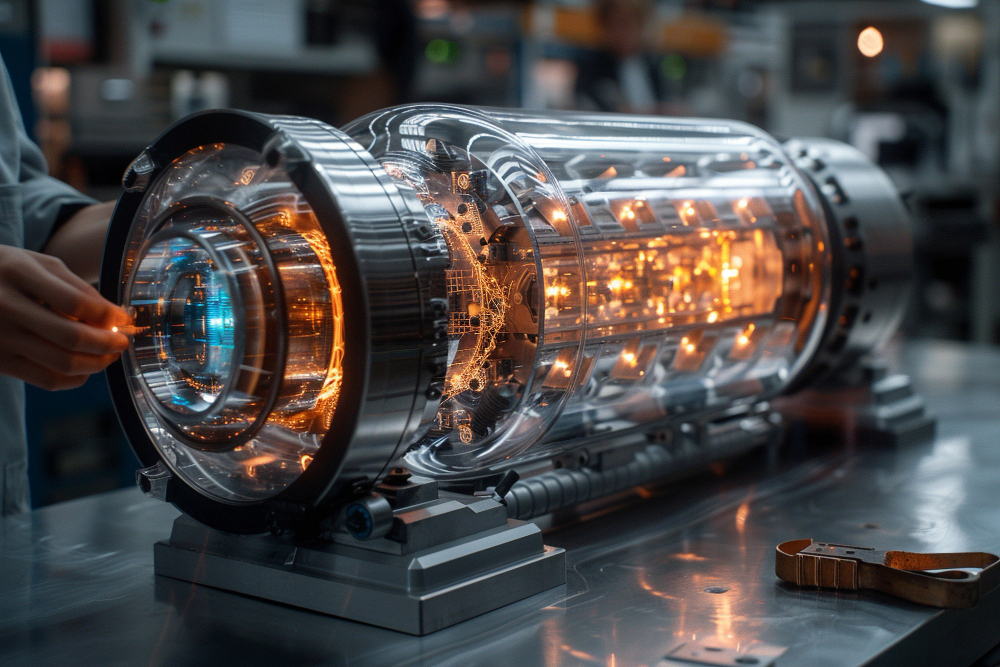
RVCR offers a different route to combustion control because variable compression and process timing are tied more directly to the engine’s own motion logic. Instead of relying only on add-on control layers around a legacy base architecture, RVCR points toward combustion behavior being shaped through a more native relationship between mechanism, compression, residence time, and expansion timing. This is one of the main reasons the platform has relevance for a changing multi-fuel future.
What this changes
- compression becomes a more active part of combustion management
- different fuels can be better matched to different combustion needs
- thermal-efficiency targets and emissions targets can be handled more intelligently
- combustion becomes less tied to one rigid legacy assumption
Extended Constant-Volume Combustion Phase
A major unique feature of the RVCR concept discussed in your document is the possibility of an extended constant-volume phase created by synchronized piston motion. Instead of immediate expansion following ignition, the architecture allows a dwell period equivalent to roughly 20–30° crank angle, during which combustion can continue while volume remains substantially constant. This is important because it gives combustion more time to develop under controlled conditions before useful expansion begins.
What this changes
- Combustion is not forced immediately into expansion
- Pressure build-up can be used more effectively
- Heat release can be shaped over time
- The system can combine aspects of diesel-like compression with Otto-like constant-volume advantage
Multi-Pulse / Staged Injection as a Combustion Strategy
Your discussion adds an important point that strengthens the combustion page: RVCR can support multi-pulse or staged injection, potentially using 10–15 small fuel pulses distributed across the constant-volume residence period. Instead of one rapid uncontrolled heat-release event, the engine can move toward a shaped combustion event in which heat release is extended, moderated, and better managed. This is valuable because it supports pressure-rise control, helps avoid knock-like behavior, and creates a more deliberate combustion strategy.
Benefits of staged heat release
- Avoids excessively sharp pressure spikes
- Allows better control of heat-release rate
- Supports more stable combustion over time
- Creates a more deliberate pressure-development profile
- Helps sustain useful combustion in a slow-speed, high-torque engine logic
Stratified Combustion and Charge Preparation Over Time
The new material also adds a useful combustion concept: progressive stratification. Because the RVCR architecture allows longer residence time, mixture preparation does not have to be compressed into the very narrow time window typical of conventional engines. This opens the possibility of richer mixture near the ignition region and leaner mixture elsewhere, or staged charge formation over time. That is important because it can support stable ignition, better combustion shaping, and improved operation under leaner or more variable fuel conditions.
Dynamic Compression-Ratio Control
A defining advantage of RVCR combustion dynamics is the ability to pursue dynamic compression-ratio control as part of the engine architecture. Ideal combustion conditions are not identical across fuels, loads, speeds, and duty cycles. A more responsive compression strategy therefore creates a stronger basis for tuning the engine toward both performance and control objectives. This becomes especially important in a multi-fuel future where hydrogen, ammonia, LPG, methanol, and biofuels all present different combustion needs.

Desired Peak Pressure for Thermal Efficiency
Combustion efficiency depends heavily on how pressure develops and where peak pressure occurs relative to useful work extraction. RVCR points toward a better route to desired peak-pressure control for thermal efficiency, allowing combustion to be shaped more purposefully instead of being constrained by less adaptable legacy timing. Better pressure management influences efficiency, output quality, and the overall usefulness of the cycle.
Desired Peak Pressure for Emission Control
The same combustion event that influences efficiency also influences emissions. If peak pressure, heat release, and expansion timing are better managed, the engine gains a stronger pathway to combustion conditions that are more favorable for emissions control. RVCR is important here because it can help shape desired peak-pressure behavior not only for output, but also for lower-emission outcomes.
Emissions relevance
- Supports lower-emission combustion pathways
- Strengthens the case for NOx and CO reduction potential
- Creates a better basis for fuel-specific combustion tuning
- Improves engine relevance under tighter future emissions expectations
Constant-Volume Heat-Addition Logic
A major thermodynamic advantage associated with RVCR is its alignment with constant-volume-dominated heat-addition logic. Conventional diesel combustion often adds heat while the piston is already moving down, which limits pressure utilization. By contrast, your RVCR concept supports a more controlled combustion phase before substantial expansion begins. This makes the engine thermodynamically interesting because it combines diesel-like compression with a more Otto-like constant-volume efficiency tendency.
Emissions relevance
- Supports lower-emission combustion pathways
- Strengthens the case for NOx and CO reduction potential
- Creates a better basis for fuel-specific combustion tuning
- Improves engine relevance under tighter future emissions expectations
Combustion in the Presence of Hot, Partially Burned Gases
A distinctive insight from your discussion is that staged fuel pulses may enter an environment already containing hot, partially burned gases. This creates both opportunities and challenges. On the positive side, hotter gases can support faster vaporization and easier ignition. On the challenging side, oxygen availability and local mixing become more important. This is useful content because it shows the RVCR concept is being thought through not only at the architecture level, but at the detailed combustion-process level as well.
Three-Variable Combustion Control
The earlier RVCR material points to three-variable combustion control, and the newer documents help explain why that matters. Combustion is not managed by one factor alone; it is influenced by compression behavior, heat-release shaping, and pressure-development control across the dwell period. This gives the page a stronger technical point: RVCR should be seen as a combustion-management architecture rather than merely a variable-compression mechanism.
Combustion in the Presence of Hot, Partially Burned Gases
A distinctive insight from your discussion is that staged fuel pulses may enter an environment already containing hot, partially burned gases. This creates both opportunities and challenges. On the positive side, hotter gases can support faster vaporization and easier ignition. On the challenging side, oxygen availability and local mixing become more important. This is useful content because it shows the RVCR concept is being thought through not only at the architecture level, but at the detailed combustion-process level as well.
High Pressure–Temperature Chemistry and More Complete Combustion
Your documents also add a chemical insight that is worth preserving on the page: high temperature and high-pressure favor more complete oxidation, moving the chemistry more decisively toward CO₂ and H₂O and away from intermediate incomplete-combustion species such as CO and unburnt hydrocarbons. By contrast, low-pressure or slower, poorly managed combustion tends to allow more partial oxidation and less complete energy release. This is important because it helps explain the emissions and efficiency logic in chemical, not only mechanical, terms.
Reduced Dependence on Flame-Travel Limits
A very important unique point from the “Piston Bore and combustion” note is that RVCR helps reduce dependence on the conventional flame-travel limitation that becomes more problematic as bore size increases. In large-bore conventional engines, longer flame travel can create incomplete combustion risk and tighter constraints on scale. In the RVCR concept, combustion can be time-controlled rather than purely flame-speed limited, because staged injection and longer residence time allow the process to develop more gradually and more completely.
Why this matters
- Better control over pressure rise
- More complete combustion potential
- Reduced dependence on one rapid flame-front event
- Better suitability for slow-speed, large-scale, high-torque combustion logic
Large Bore, Large Radius, and Slow-Speed High-Torque Combustion
Your combustion note adds another strong systems-level idea: RVCR is not only about combustion control in a narrow sense, but about making large, slow-speed, high-torque operation more viable. Conventional attempts to gain torque by greatly increasing bore face combustion, thermal, and structural limits. In the toroidal RVCR concept, two things help change this:
a larger effective area for force generation
a larger lever arm / chamber radius for torque conversion
Continuous Torque Conversion Through Better Mechanical Leverage
The “System Concept” note adds a particularly valuable idea: the radial piston logic can behave more like a crowbar, maintaining near-constant mechanical advantage, unlike a crank mechanism whose leverage varies strongly with angle and is poorest near top dead center. This means even short pressure bursts can be converted into torque more effectively. That is important because combustion value depends not only on how well fuel burns, but on how effectively pressure is turned into useful shaft work.
Distributed Thermal Loading in the Toroidal Chamber
Another unique point from the bore-and-combustion note is the thermal behavior of the toroidal chamber. Unlike a conventional cylinder, where heat can concentrate around more fixed localized wall regions, the RVCR toroidal chamber distributes heat along the chamber path. This can reduce localized hot-spot severity and improve thermal distribution.
Remaining hot surfaces, such as piston faces, may then be addressed more specifically through active cooling strategies. This is useful because it adds a thermal-management angle to the combustion page.
Smooth Fuel Change-Over and Multi-Fuel Combustion
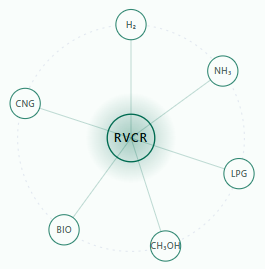
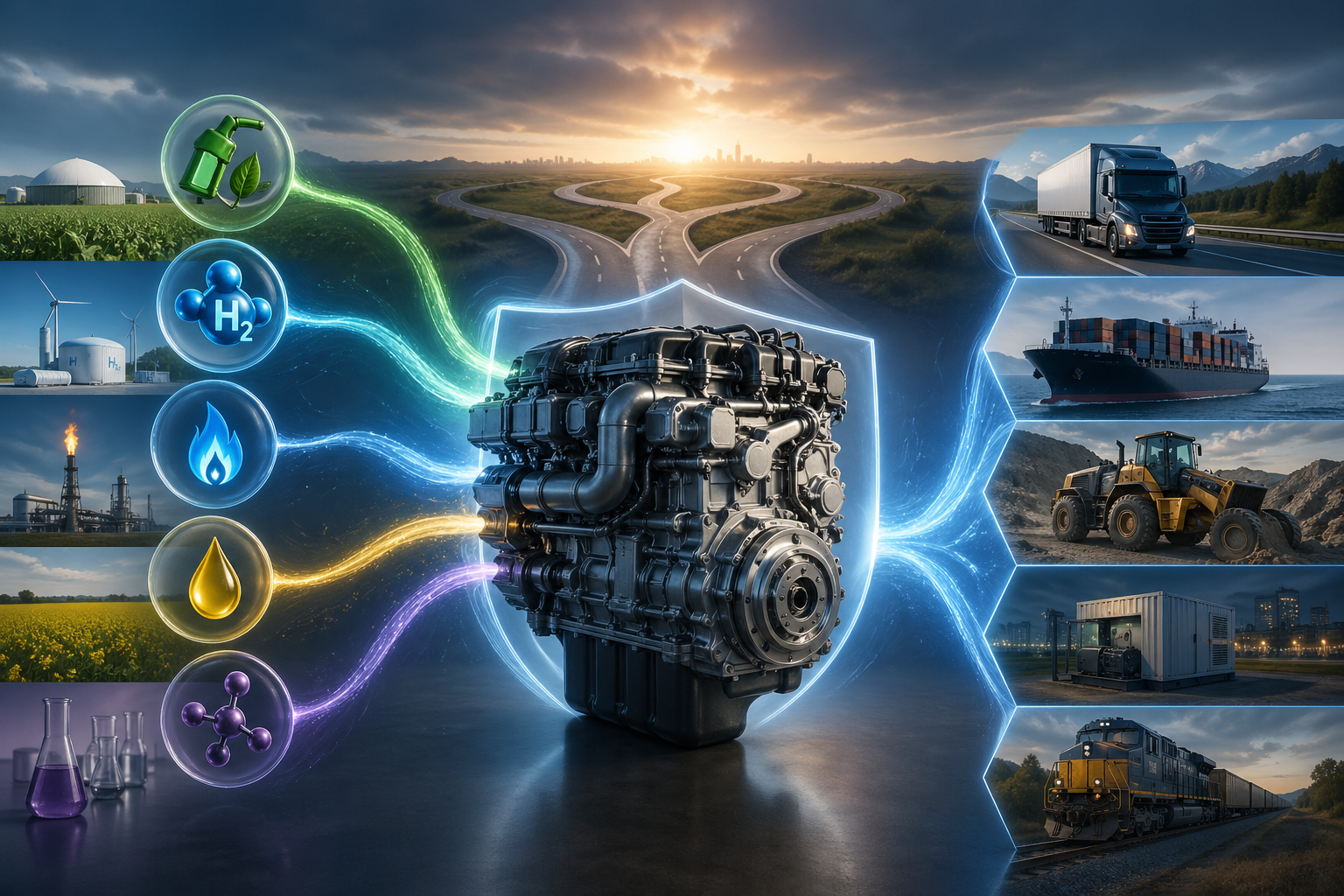
Combustion dynamics become especially important when an engine must work across multiple future-fuel pathways. Hydrogen, ammonia, LPG, methanol, biofuels, and other alternatives do not behave identically in combustion. A platform that can support smooth fuel change-over, more adaptable compression control, and staged heat-release logic is therefore far better suited to the transitional fuel landscape than an architecture optimized too narrowly around one assumed future fuel. RVCR is relevant here because it supports combustion flexibility at the architectural level.
Combustion Dynamics and Fuel Efficiency
Combustion control and fuel efficiency are directly linked. Better pressure control, more useful heat release, reduced losses, and stronger adaptation to different fuels can all contribute to better fuel-efficiency outcomes. RVCR’s combustion dynamics should therefore be presented not only as an emission or control story, but also as a fuel-efficiency story rooted in deeper engine logic.
Fuel-efficiency-related points
- fuel-efficiency gains through variable compression
- optimum power-to-economy ratio
- reduced area and time for radiation losses
- more purposeful heat-addition behavior
Why RVCR Combustion Dynamics Matter Now
Combustion dynamics matter now because the future engine market is being shaped by fuel uncertainty, emissions pressure, and the need for better efficiency across more diverse operating conditions. In that environment, architectures that offer deeper combustion adaptability become more relevant than systems that remain too tightly bound to legacy combustion assumptions. RVCR matters because it gives combustion control a more central place in the engine architecture itself.