
Cost & Lifecycle Economics
The value of an engine architecture is measured not only by how it performs, but also by how it behaves across the product lifecycle. RVCR points toward economic advantages through reduced system burden, fewer mechanical dependencies, more compact packaging, lower wear-related penalties, and a more adaptable platform for future fuel and application pathways. This should be presented as lifecycle logic rather than as a simplistic cost-saving claim.
Lower Cost Potential Through Simpler Architecture
One of the strongest economic arguments for RVCR is that the architecture reduces or eliminates several conventional engine elements and related support burdens. A mechanism with fewer major reciprocating dependencies, fewer heavily stressed legacy parts, and less need for corrective subsystem complexity can create a simpler base for future product realization. This simplicity is important because it influences manufacturing logic, packaging, service burden, and the overall economic character of the engine platform.
Key cost-related architecture advantages
- Lower wear rate
- No con rod / piston rod
- No gudgeon / top-end bearings
- No entablature
- No dedicated flywheel in the conventional sense
- Reduced valve gear
- No crank-case / relief-vent arrangement in the conventional sense
- Smaller and lighter core engine logic
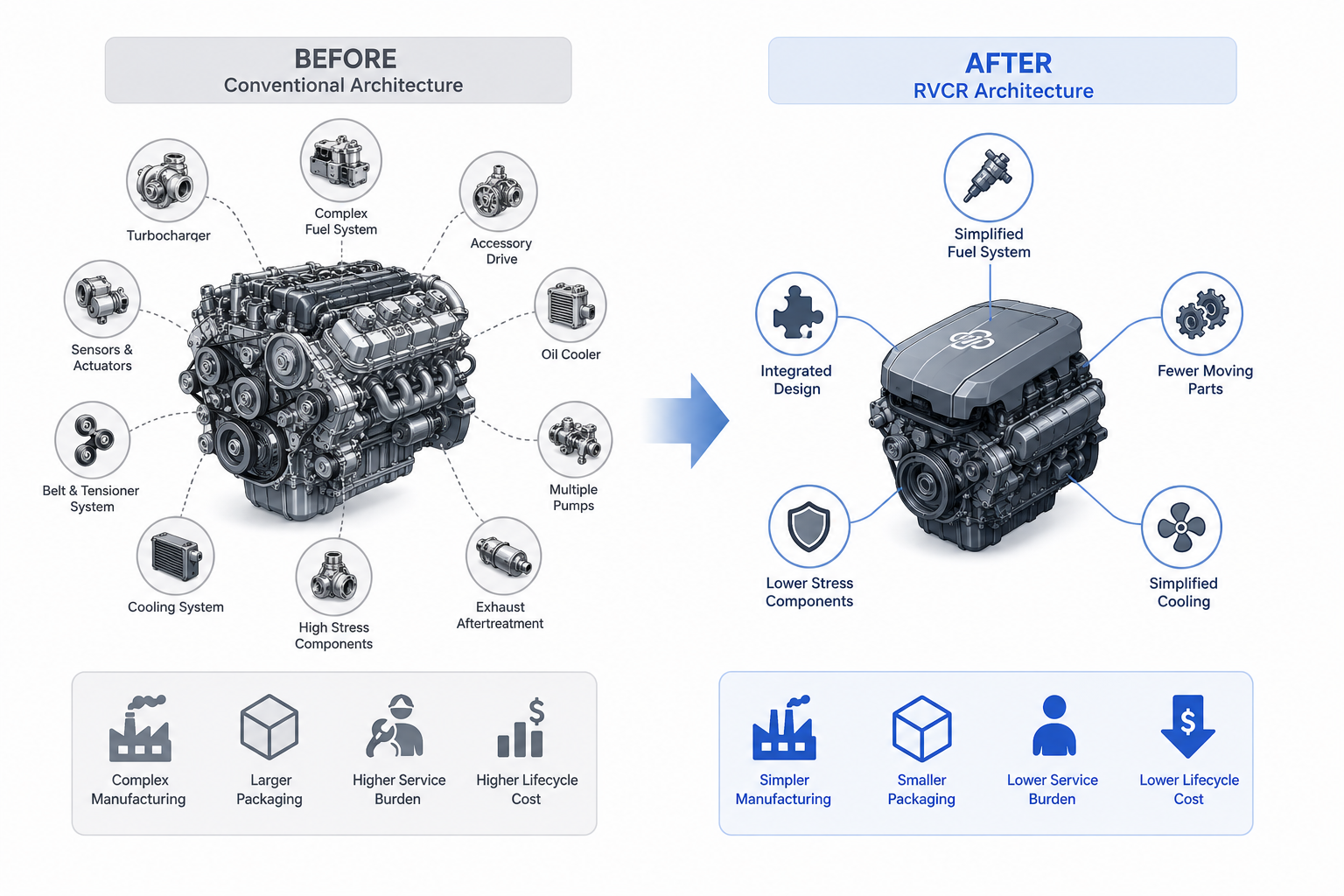
Smaller Engines, Better Packaging, Lower System Burden
Smaller engines can create value beyond direct size reduction. Compactness affects the total system by influencing integration ease, packaging flexibility, structural burden, and potentially even the cost of surrounding installation and support architecture. RVCR’s lower mass-and-volume-per-horsepower direction therefore has lifecycle implications that go beyond the engine block itself. It can improve how the engine fits into future product platforms and how efficiently those platforms are engineered around it.
Key packaging and system advantages
- Low mass / volume per HP
- Downsizing potential
- Piston weight reduction
- More compact engine layouts
- Lower system burden around installation and packaging
Longer Service Life Improves Lifecycle Value
An engine that runs more smoothly and wears more slowly can create better lifecycle economics even if headline manufacturing costs alone do not tell the full story. RVCR points toward this kind of value through lower wear rates, reduced vibration burden, better balance, smoother motion logic, and fewer conventional reciprocating penalties. Over time, these operating characteristics may support longer-lasting engines and a more favorable maintenance profile.
Key lifecycle-value advantages
- Longer-lasting engines
- Lower wear-related replacement burden
- Fewer vibration-driven penalties
- Better operating stability over time
- Reduced maintenance complexity across service life
RVCR Solves a More Fundamental Problem
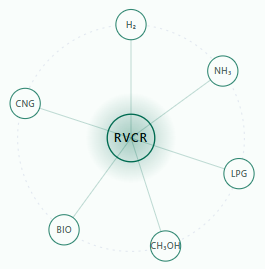
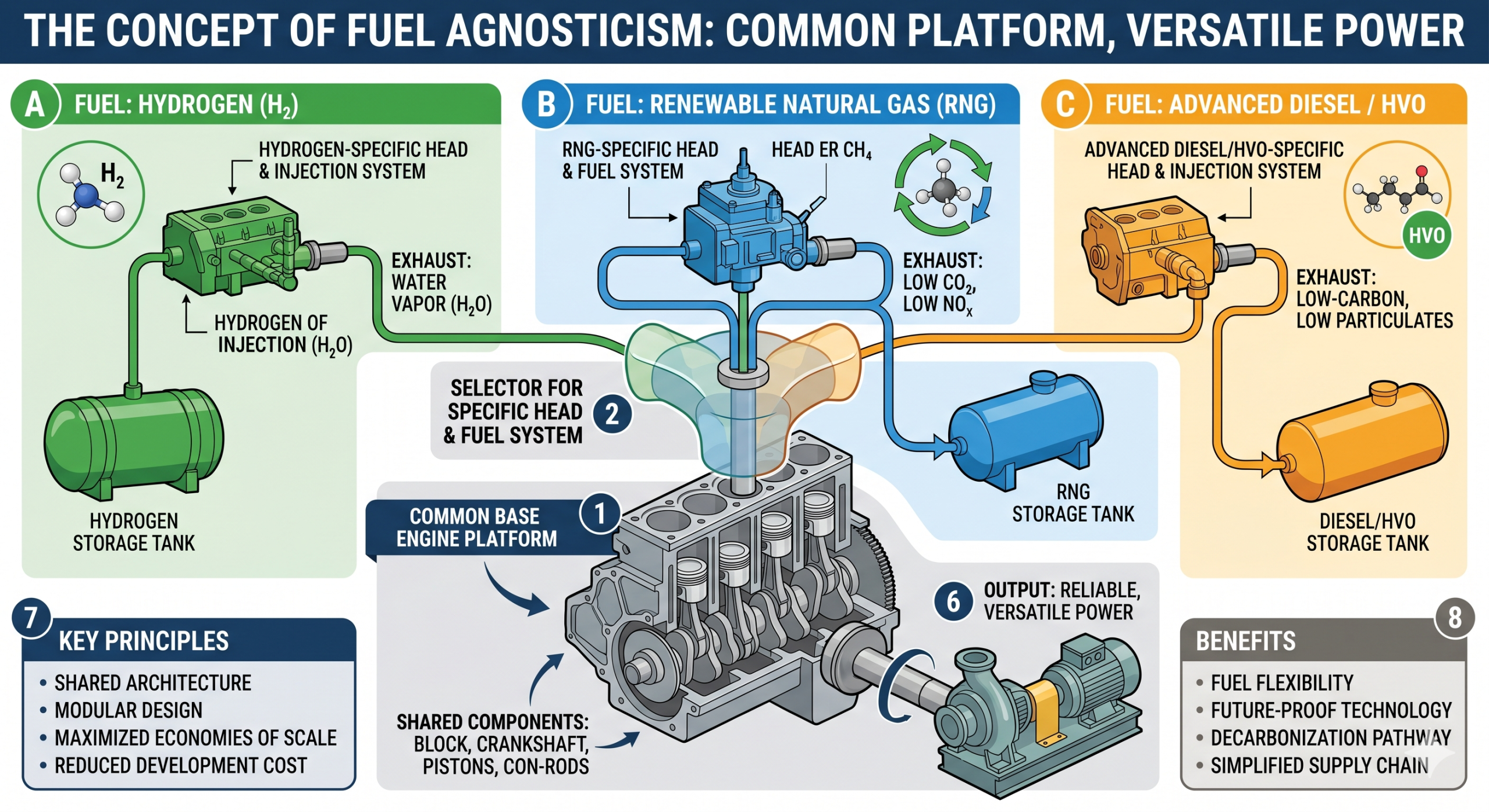
Lifecycle economics are also shaped by how well an engine remains relevant as fuel conditions change. A platform that is too tightly bound to one future-fuel pathway can carry transition risk. RVCR’s adaptability and variable-compression logic create the possibility of stronger fuel flexibility, and that flexibility can improve economic resilience by reducing the risk of premature obsolescence or narrow market fit. In this sense, fuel flexibility is not only a functional benefit — it is also a lifecycle-economic one.
Key fuel-related economic advantages
- Multiple-fuel compatibility
- Smoother fuel change-over
- Broader application fit across future fuel ecosystems
- Reduced dependence on one narrow fuel bet
- Stronger long-term relevance in transitional markets
Cost Advantage Should Be Read as System Value
The strongest economic case for RVCR is not that one component will necessarily be cheaper in isolation. It is that the system may become more economically attractive when architecture, packaging, maintenance, durability, adaptability, and product relevance are viewed together. That is why cost and lifecycle economics should be framed as system value rather than as a narrow bill-of-materials claim. This is a more credible and more useful way to explain the platform’s economic promise.
Why Lifecycle Economics Matter in a Transitional Market
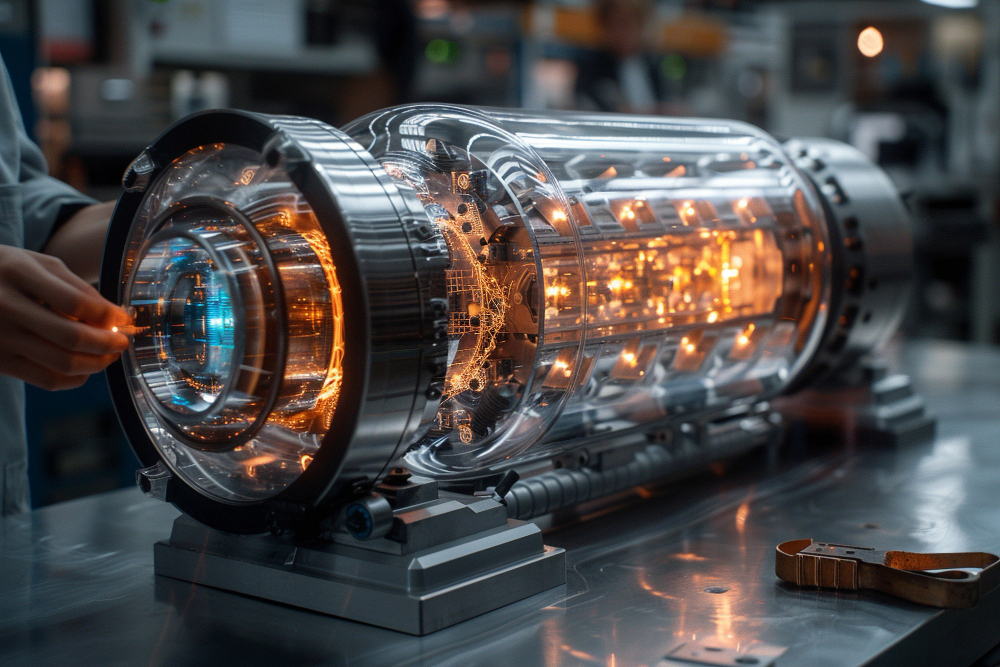
The engine industry is entering a period where product decisions are influenced not only by upfront cost, but also by fuel uncertainty, regulatory pressure, maintenance burden, emissions expectations, and long-term product adaptability. In this environment, lifecycle economics become more important than ever. RVCR matters because it offers a route to cost logic that remains connected to long-term transition value, not just near-term engineering substitution.