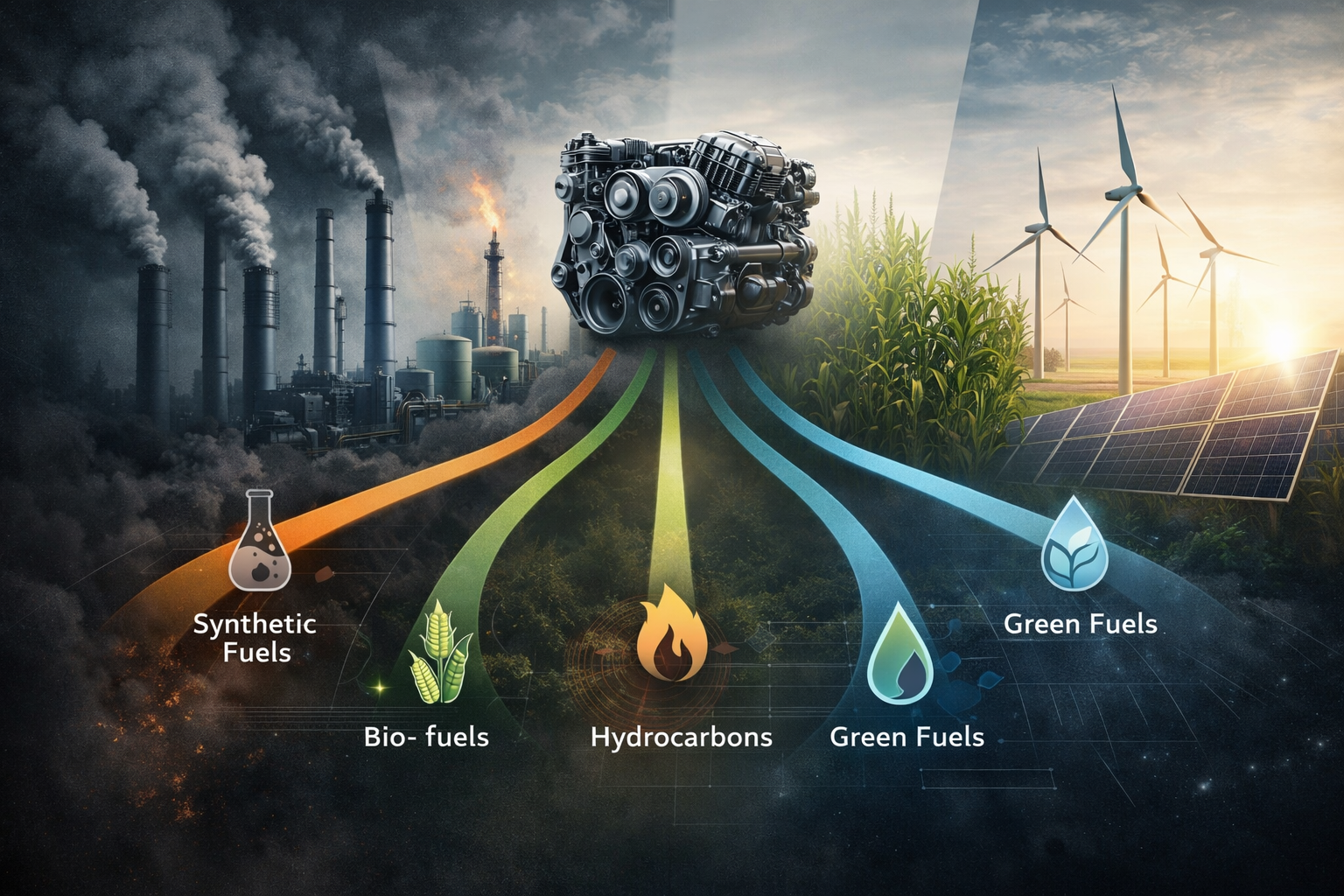
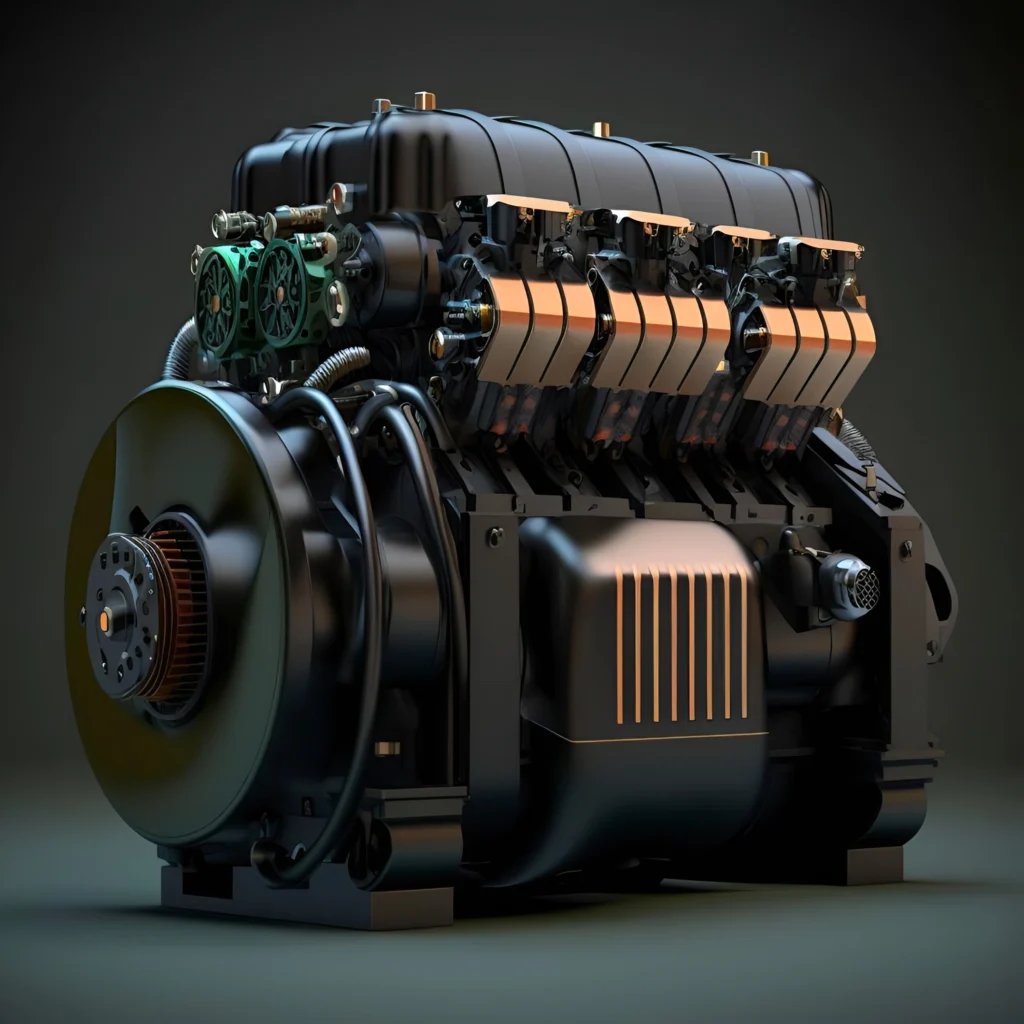
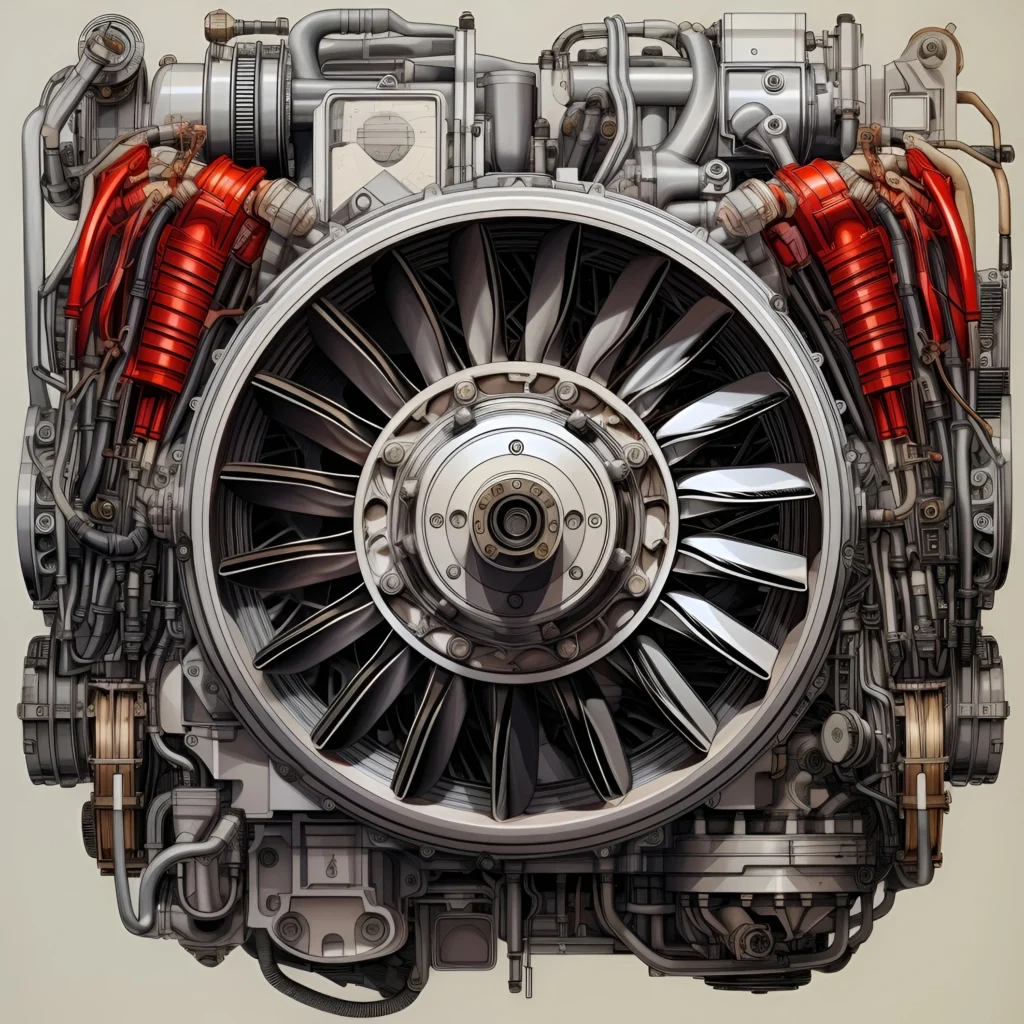
KGYAT Engines is redefining internal combustion for a world transitioning beyond fossil‑fuel lock‑in. Built on the globally validated RVCR (Roto‑Dynamic Variable Compression Ratio) invention, our engine architecture enables real‑time adaptability, absolute combustion control, and multi‑fuel operability—without compromising performance, durability, or industrial scalability. This is not an incremental improvement to legacy piston‑crank systems. It is a new class of energy‑conversion machinery, engineered for the realities of decarbonization, hybridization, and fuel diversity.
The world faces a climate crisis driven by rising carbon emissions and continued dependence on fossil fuels. Conventional prime movers based on slider–crank mechanisms and turbines are close to their efficiency limits.
While EVs, fuel cells, biofuels and renewables are advancing, most still rely on century-old mechanisms, which means progress is often limited to incremental gains.
RVCR introduces a new prime-mover architecture that can underpin next-generation engines and propulsion systems, enabling step-change improvements in efficiency, emissions and adaptability.
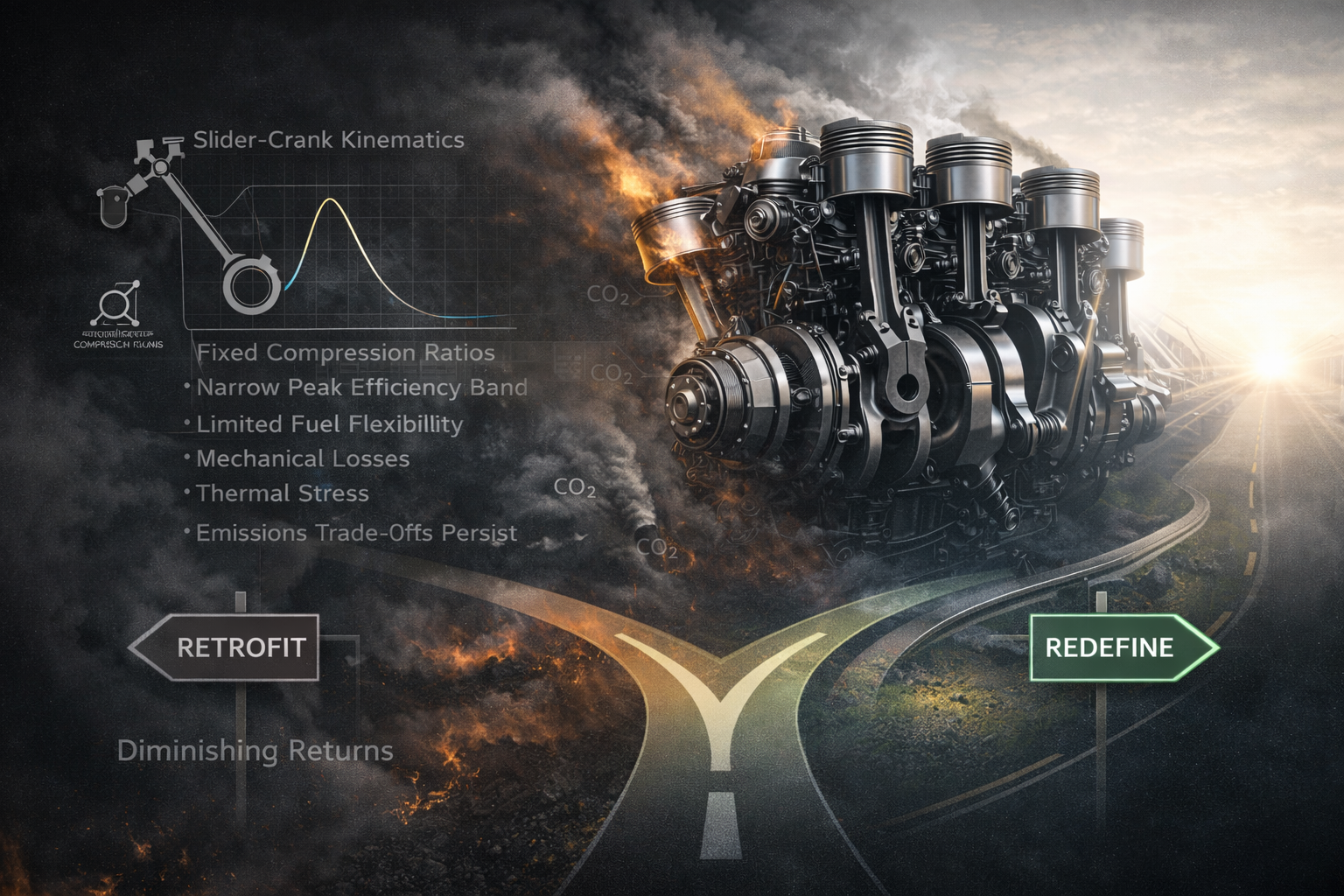
Despite a century of refinement, conventional internal‑combustion engines remain constrained by slider‑crank kinematics and fixed compression ratios. Efficiency peaks only within narrow operating windows. Fuel flexibility is limited. Mechanical losses, thermal stress, and emissions trade‑offs persist.
As regulatory pressure intensifies and hybrid architectures proliferate, retrofitting legacy mechanisms has reached diminishing returns. The industry now faces a fundamental choice: extend an exhausted paradigm—or redefine the mechanism itself.
RotoDyCo³™ Technology at a Glance
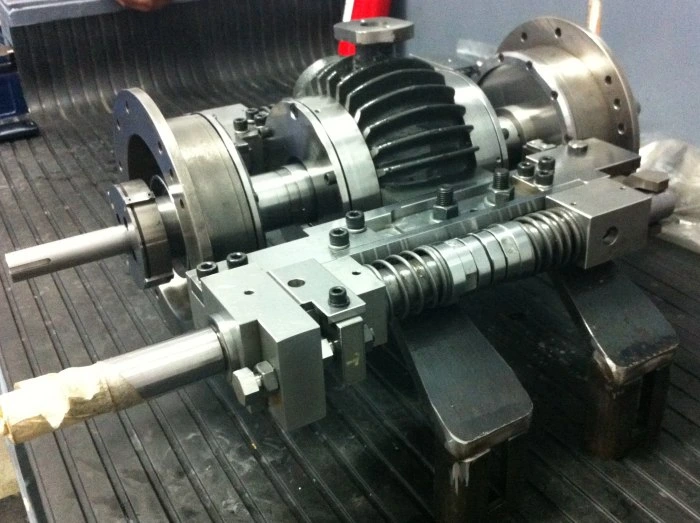
RotoDyCo³™ is a rotary‑toroidal energy‑conversion architecture based on the RVCR mechanism. By replacing reciprocating kinematics with controlled rotary motion, it enables native, real‑time variable compression without external actuators or mechanical complexity.
Key architectural outcomes include: – Continuous compression‑ratio modulation – Direct torque transfer through the entire expansion cycle – Superior mechanical leverage and reduced losses
The result is a combustion system that is inherently adaptive rather than conditionally optimized.
Beyond piston and turbine lies a third fundamental mechanism—RVCR’s rotary continuum—simplifying energy conversion while elevating efficiency and miniaturization.
Our initial focus is on medium‑ and slow‑speed, heavy‑duty segments where efficiency, durability, and emissions compliance are critical: – Hybrid commercial vehicles – Off‑highway construction and mining equipment – Marine propulsion and auxiliary systems – Decentralized and distributed power generation – Strategic and defense logistics platforms
KGYAT Engines is progressing through advanced simulation, hardware prototyping, and validation to demonstrate industrial scalability and readiness. The RVCR platform has evolved through extensive kinematic, thermodynamic, and manufacturability evaluation, positioning it for pilot deployment with strategic partners.
KGYAT engages with OEMs, technology partners, and strategic investors to co‑develop, pilot, and industrialize RVCR‑based engine platforms. Collaboration models include joint development, application‑specific customization, and structured technology licensing.
A ‘Rotary pistons mechnism of Energy Conversion’ enabling real time VCR.
The Advent of Fuel agnostic engines era
Challenge
The Challenge with Conventional Engines
A century of refinement, yet still bound by the crank.
Traditional internal-combustion engines, despite 100 years of evolution, remain shackled by fixed compression ratios and linear slider-crank kinematics. Efficiency peaks only in narrow load bands, fuel flexibility is limited, and emission targets grow ever stricter.
Rotary Kinematics powering the next leap in combustion.
RotoDyCo³ Engines apply patented rotary kinematics to overcome the slider-crank’s limits—transferring force more directly and adjusting compression effortlessly for any fuel.
Energy flows without interruption. Motion becomes continuity.
Inside the toroidal core, every moving element works in sync — no dead spots, no reversals, no wasted effort. Motion becomes a smooth continuum, unleashing a purer, more complete form of energy conversion.
DyCo³ rewrites what engines can do. Instead of fixed designs fighting changing demands, it optimizes itself in real time — across fuels, loads, and conditions — delivering higher efficiency through intelligent adaptability, not brute force.
As electrification surges, prime-mover efficiency remains the weakest link. RotoDyCo³ offers a direct path to low-carbon propulsion without disruptive infrastructure change.
The decarbonization gap needs a mechanical answer.