
Why Fuel-Agnostic Engines Matter Now
The future fuel mix won’t be uniform. Engines built for adaptability — not for a single bet — are the ones
that will stay relevant across the green-fuel transition.
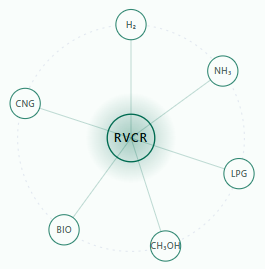
Hydrogen
Ammonia
LPG
CNG
Methanol
Ethanol
Biofuels
The Green-Fuel Transition Is No Longer Theoretical
The engine industry is no longer planning only around conventional fossil fuels. Across transport, marine, stationary power, and off-highway sectors, companies are actively exploring greener fuel pathways such as LPG, ammonia, hydrogen, methanol, biofuels, and other alternative-fuel combinations.
This shift is being driven by emission regulation pressure, carbon targets, fuel-security concerns, and the need to keep internal-combustion platforms relevant in a changing energy landscape.
Industry Players Are Making Fuel-Specific Bets
Many industry players are responding by investing in fuel-specific engine technologies. Some are optimizing for hydrogen. Others are focused on ammonia, LPG, CNG, methanol, ethanol blends, or advanced biofuels.
These decisions are often shaped by each company’s market view, infrastructure assumptions, regional policy expectations, and product strategy.
But this also creates fragmentation, because each pathway can demand its own engineering compromises, combustion strategy, supply-chain alignment, and platform adaptation.
The Risk of Fuel-Locked Engine Pathways
A fuel-specific strategy can create progress, but it can also create lock-in. If an engine platform is too tightly optimized around one future-fuel pathway, it may lose flexibility as policy, infrastructure, economics, or customer demand shift. In a market that is still evolving, overcommitting one fuel direction can increase risk rather than reducing it.
Why Fuel Agnosticism Matters
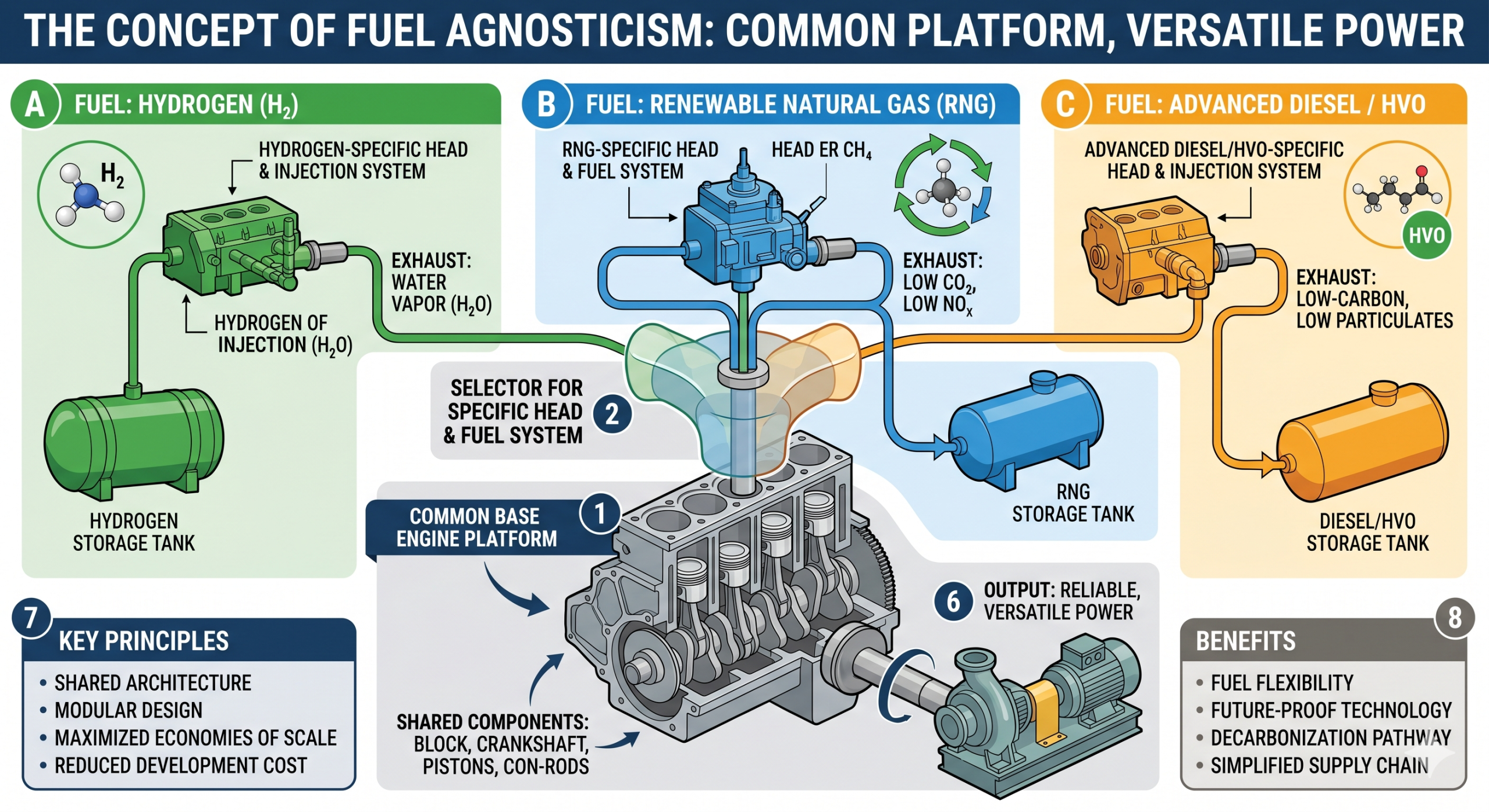
Fuel agnosticism matters because the future fuel mix is unlikely to be uniform. Different sectors, regions, and applications will transition at different speeds and through different fuel ecosystems. Engines that can adapt across multiple fuels are therefore more strategically relevant than engines tied too tightly to one narrow pathway. A fuel-agnostic platform offers resilience, optionality, and broader long-term usefulness.
RVCR Solves a More Fundamental Problem
Fuel agnosticism matters because the future fuel mix is unlikely to be uniform. Different sectors, regions, and applications will transition at different speeds and through different fuel ecosystems. Engines that can adapt across multiple fuels are therefore more strategically relevant than engines tied too tightly to one narrow pathway. A fuel-agnostic platform offers resilience, optionality, and broader long-term usefulness.
Dynamic Compression Makes Multi-Fuel Logic More Practical
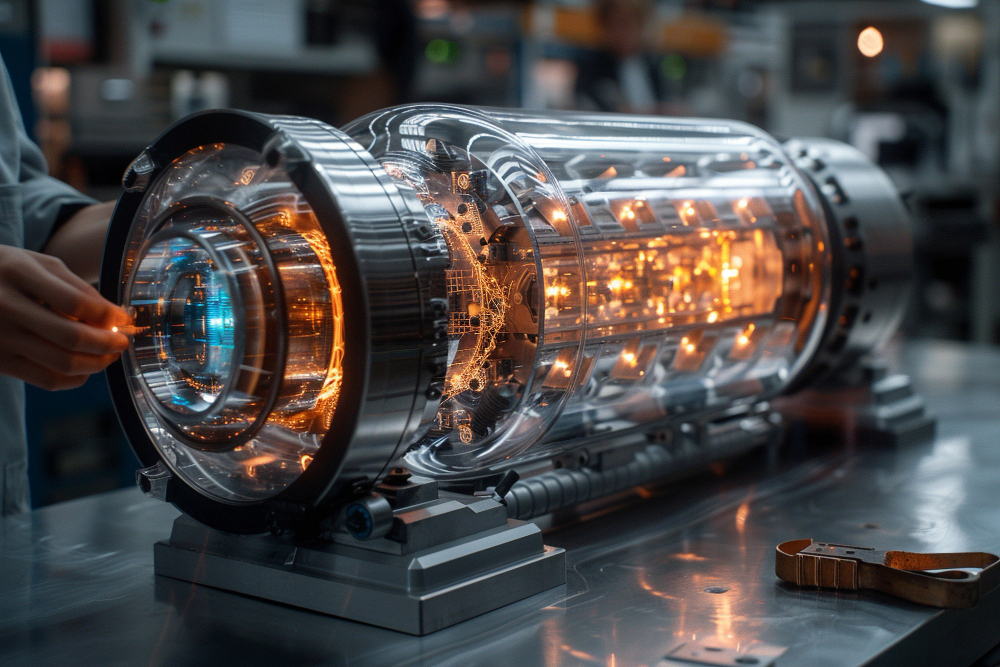
One of the central reasons RVCR matters in the green-fuel transition is that variable compression becomes more practical and more central to the engine architecture. Different fuels demand different combustion conditions.
A platform that can better accommodate these changing combustion requirements gains a major advantage in a world where fuel flexibility is becoming a strategic necessity rather than a bonus feature.

A Better Fit for a Transitional Market
The current market is not moving from one old fuel to one new fuel. It is moving through a transitional phase with multiple candidate fuels, multiple compliance pathways, and multiple sector-specific needs. RVCR is well positioned for this reality because it supports a broader engine logic rather than a one-fuel-only bet. That makes it more compatible with uncertainty, phased transition, and mixed-fuel future markets.
Why Fuel-Agnostic Engines Matter Now
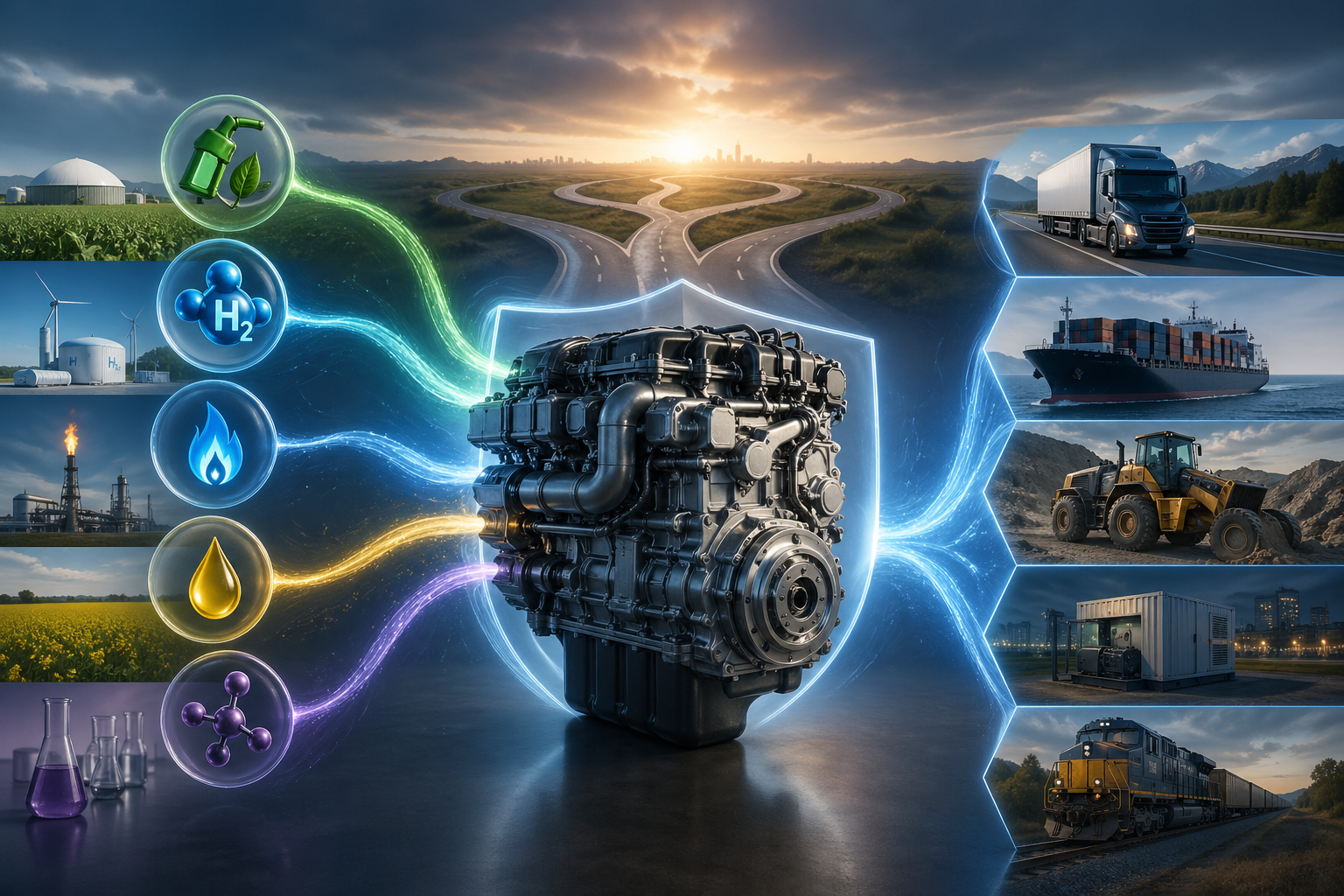
Fuel-agnostic engines matter now because the industry needs platforms that can remain relevant while the fuel landscape is still being shaped. The question is no longer only which fuel will win.
The deeper question is which engine architectures can remain useful across changing fuel scenarios. RVCR offers a strong answer to that question by aligning engine design with adaptability, future relevance, and transition resilience.