
Combustion Control & Emissions Reduction with RVCR
Meeting present and future emissions regulations requires more than exhaust after‑treatment. Emissions are fundamentally a consequence of how combustion occurs—specifically how temperature, pressure, and burn duration are controlled during the power cycle.
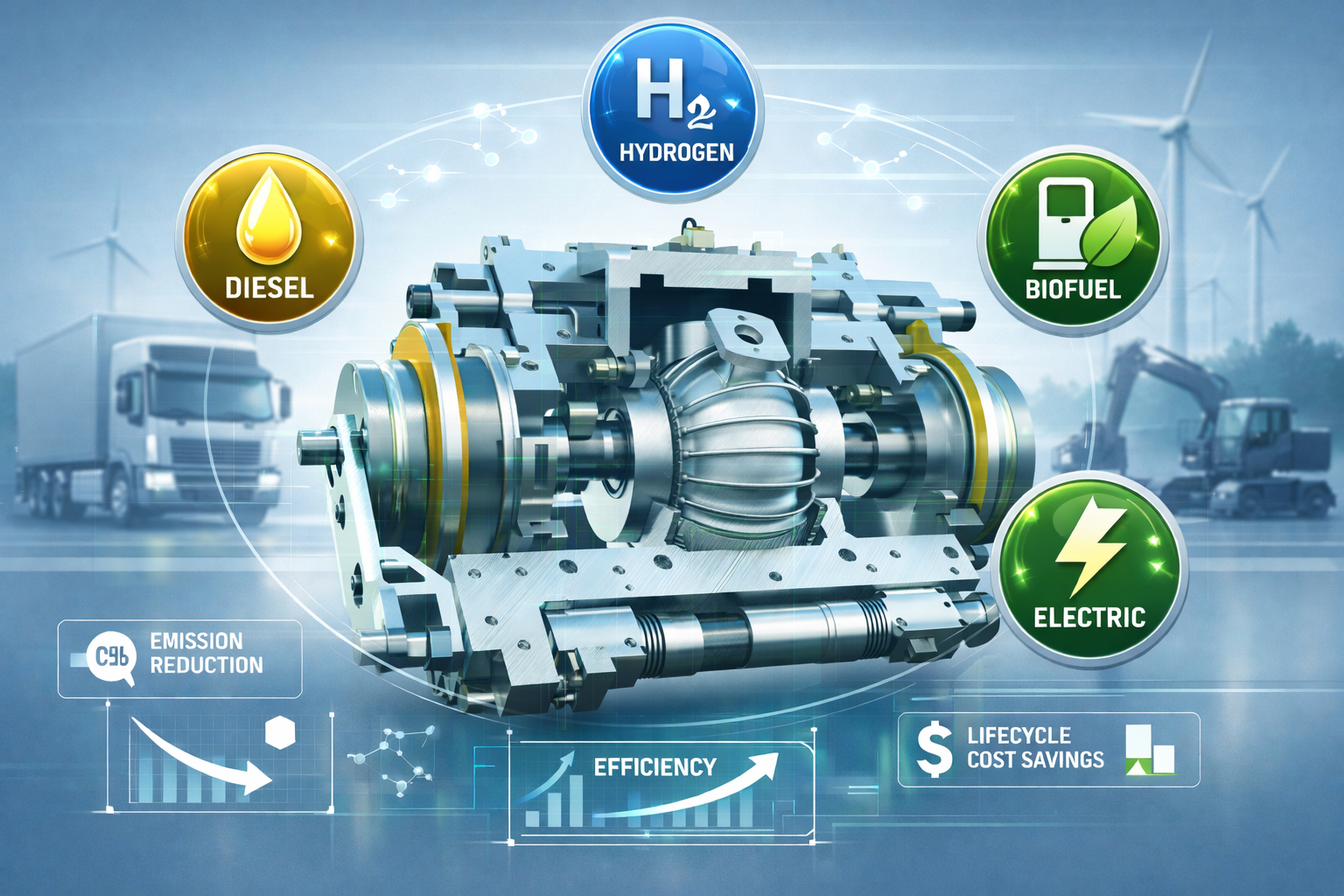
The RVCR engine platform addresses emissions at their root cause by enabling adaptive combustion control through real‑time variable compression and synchronized energy release. This approach allows cleaner combustion across fuels and operating conditions, rather than relying solely on downstream mitigation.

Adaptive Compression as a Combustion Control Tool
In conventional engines, compression ratio is fixed, forcing designers to compromise between efficiency, knock resistance, and emissions across operating conditions.
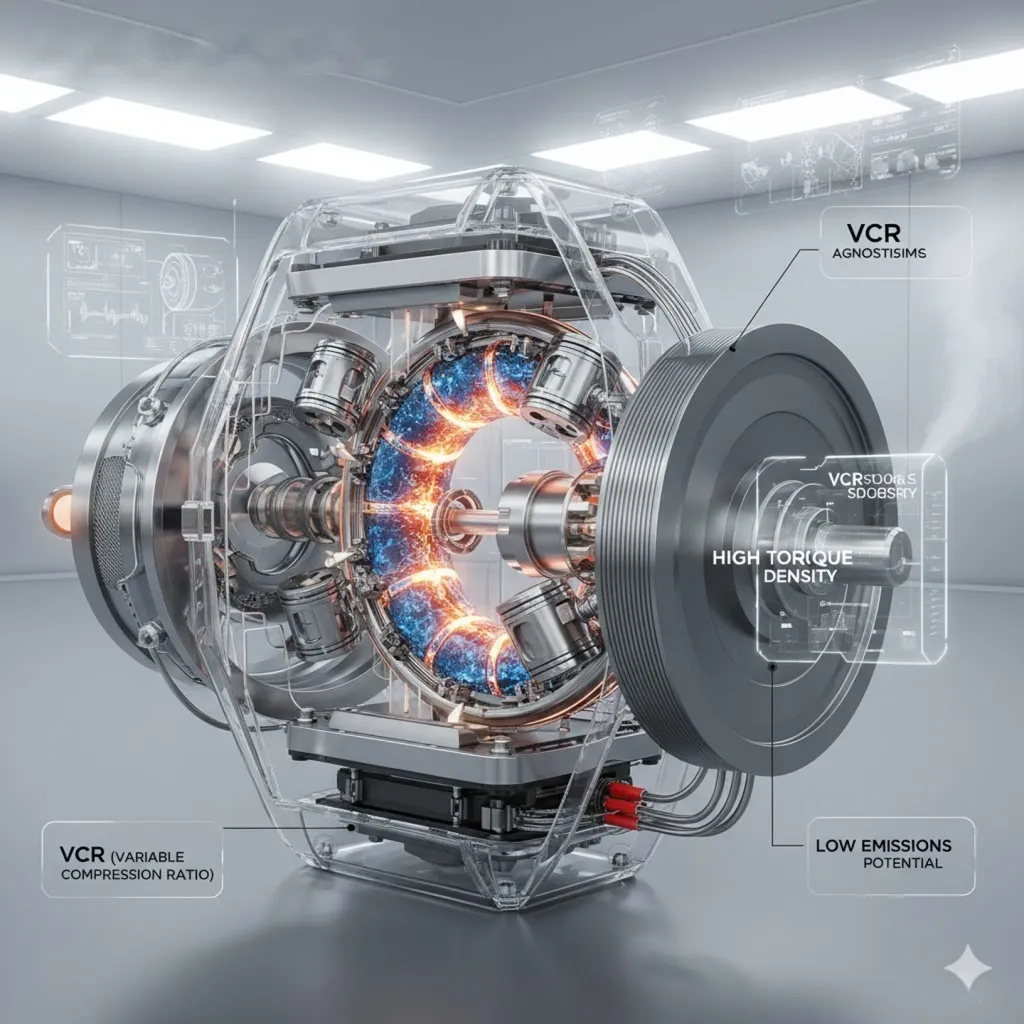
RVCR enables continuous, real‑time adjustment of compression pressure, allowing the engine to: – Match compression to specific fuel characteristics – Control peak temperatures during combustion – Maintain optimal burn conditions across variable loads
This adaptability forms the foundation of RVCR’s emissions performance.
Constant‑Volume‑Dominant Heat Addition
RVCR architecture enables a combustion sequence that approaches constant‑volume‑dominant heat addition, improving thermodynamic efficiency while stabilizing combustion.
Key effects include: – Faster, more controlled energy release – Reduced heat loss during expansion – Improved utilization of fuel energy
More stable heat addition directly contributes to lower unburnt hydrocarbons and improved overall efficiency.
NOx Reduction Through Temperature Management
Nitrogen oxide (NOx) formation is strongly correlated with peak combustion temperatures and residence time at those temperatures.
RVCR reduces NOx formation by: – Limiting peak temperatures through adaptive compression – Distributing heat release more uniformly – Avoiding extreme pressure and temperature spikes
This intrinsic control reduces reliance on complex exhaust gas recirculation or aggressive after‑treatment strategies.
Reduction of Unburnt Hydrocarbons
Incomplete combustion and quench‑layer effects are major contributors to hydrocarbon emissions in conventional engines.
RVCR mitigates these effects through: – Controlled combustion chamber geometry – Improved mixing and burn completeness – Reduced quench‑layer persistence during expansion.
The result is cleaner combustion across a wider range of fuels and operating conditions.
Fuel‑Specific Combustion Optimization
Different fuels exhibit widely varying ignition, burn, and knock characteristics. Fixed‑geometry engines must compromise across fuel types.
RVCR enables: – Compression and combustion tuning specific to each fuel – Seamless adaptation to synthetic fuels, bio‑fuels, and transitional hydrocarbons – Stable emissions behavior without mechanical redesign.
This flexibility supports regulatory compliance across regions with differing fuel standards.
A System‑Level Emissions Strategy
By addressing combustion physics directly, RVCR shifts emissions control upstream, reducing dependence on increasingly complex after‑treatment systems. This system‑level approach improves reliability, lowers cost, and enhances long‑term compliance potential.