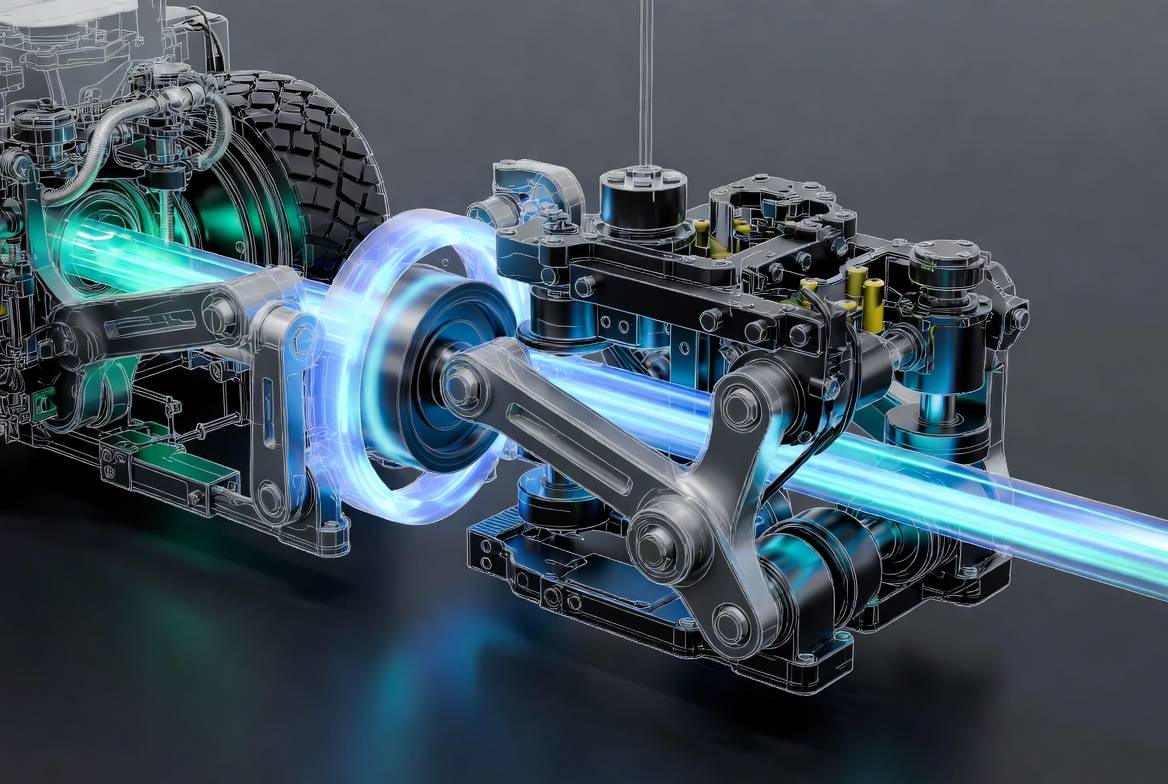
RVCR (Roto‑Dynamic Variable Compression Ratio) and its engine embodiment, RotoDyCo³™, represent a fundamental shift in how mechanical energy is converted from combustion. Rather than optimizing within the constraints of piston‑crank geometry, RVCR introduces a new kinematic class—one that enables continuous, real‑time control of compression and torque transfer as an intrinsic property of the mechanism.
This technology is designed for a future where engines must adapt dynamically to fuel diversity, operating variability, and emissions constraints—without external complexity or architectural compromise.
RVCR as a New Mechanism of Energy Conversion
At its core, RVCR is an invention in mechanical kinematics, not an incremental engine feature. It replaces reciprocating motion and slider‑crank linkages with a controlled rotary‑toroidal motion that maintains optimal force orientation throughout the combustion cycle.
Key implications of this shift include: – Elimination of reciprocating inertia losses – Continuous mechanical leverage through gas expansion – Decoupling of compression control from fixed geometry.
RVCR therefore operates as a mechanism‑level solution to efficiency, emissions, and fuel‑flexibility challenges that conventional engines can only address conditionally.